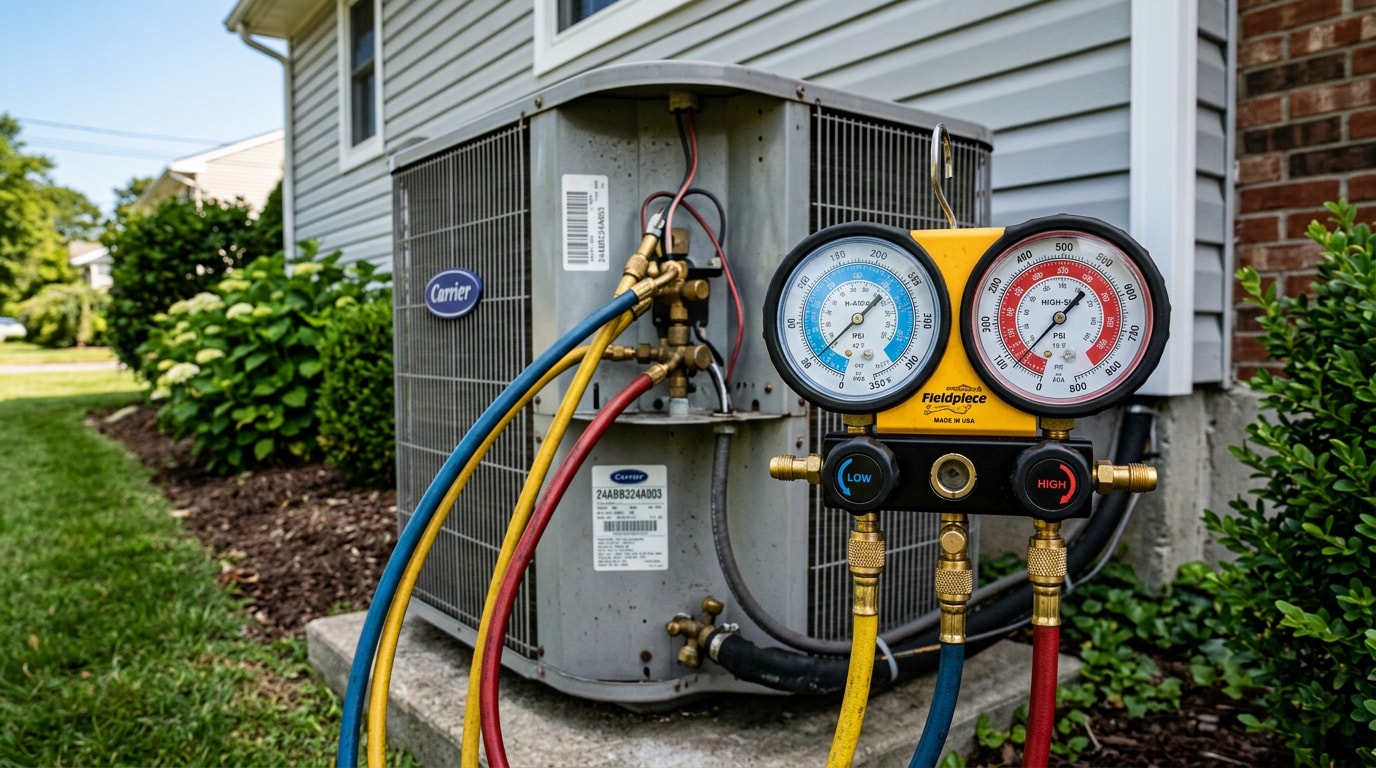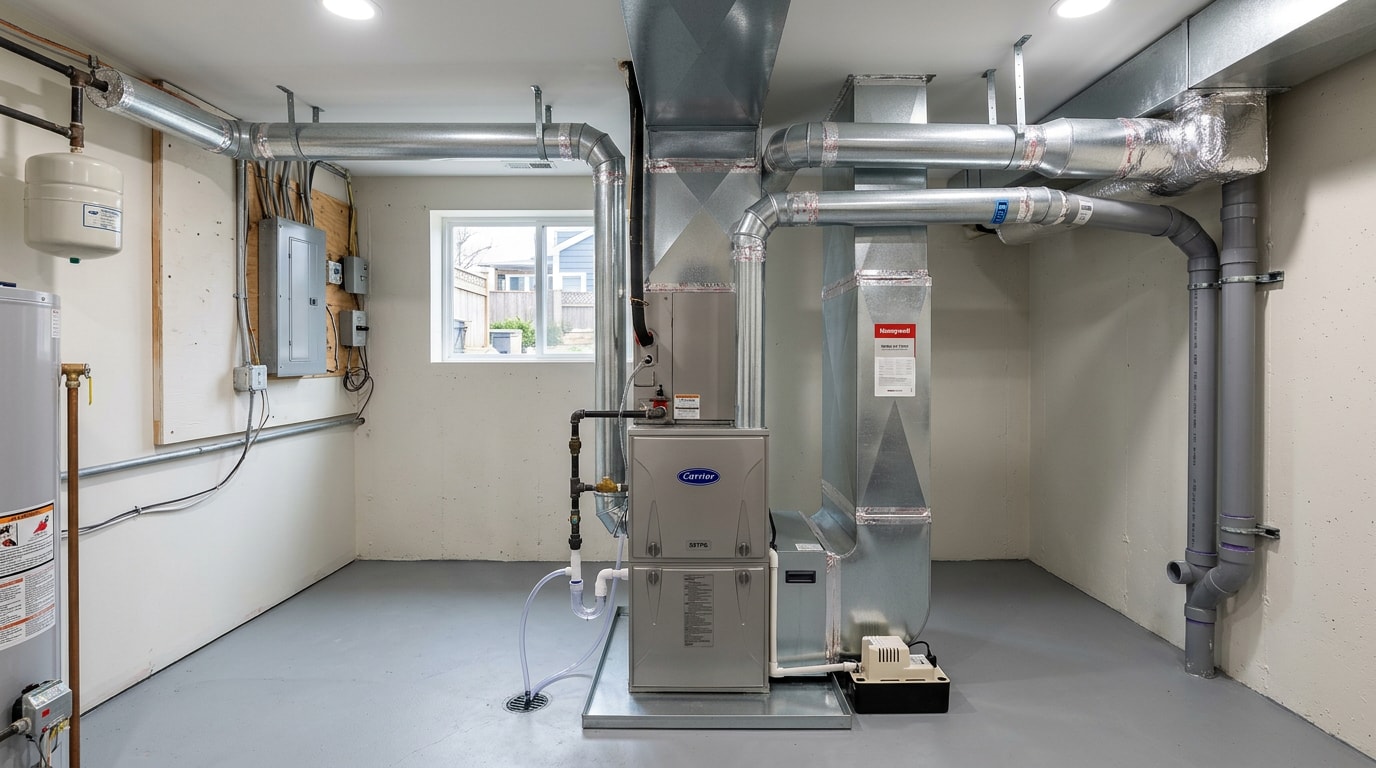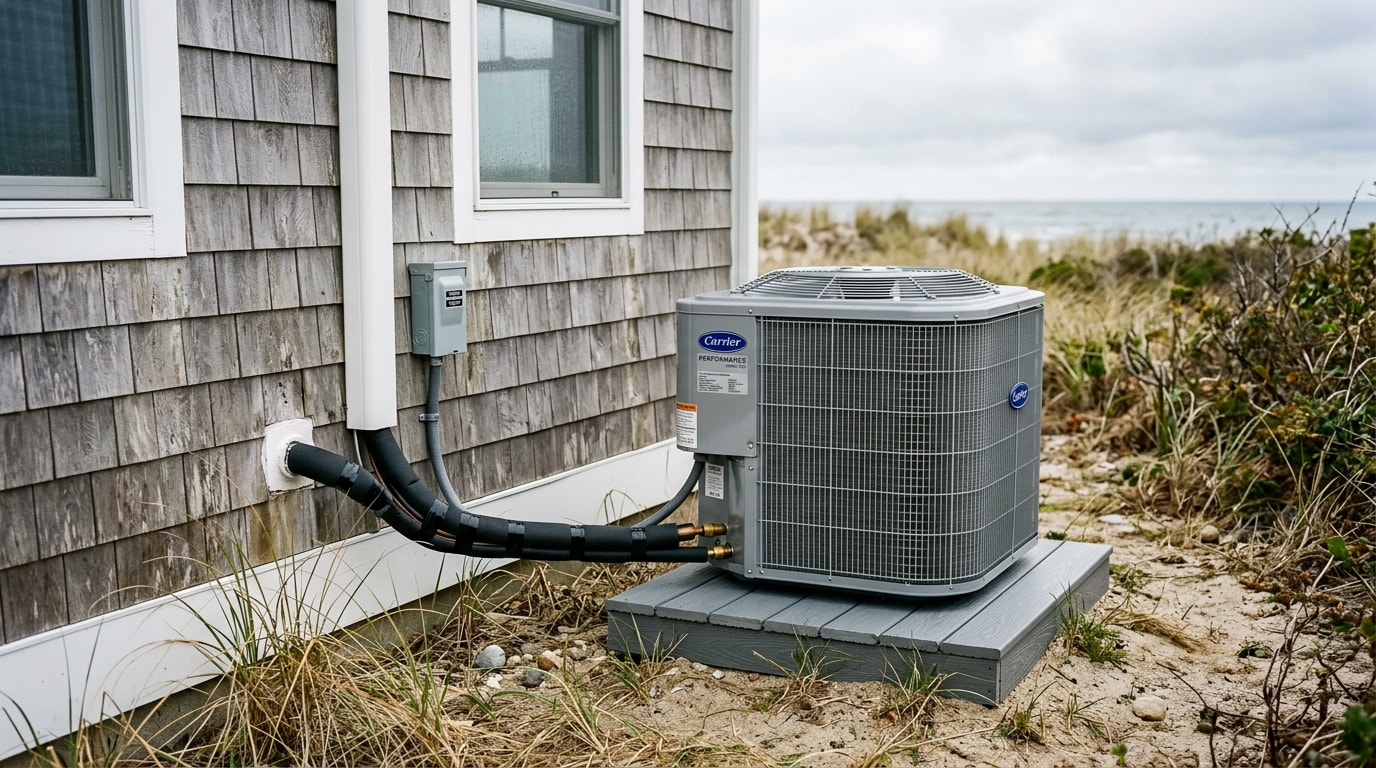
AC heating and cooling repair in Montauk, NY carries a coastal penalty that inland Long Island homes never pay: salt aerosol eats outdoor coils, fasteners, and control boards years ahead of schedule. A fault caught in June is usually a $300 part, while the same fault ignored until the first August heat wave is often a compressor. Below are the warning signs, real 2026 price ranges, and the point where replacement beats another repair bill.
Signs You Need HVAC Repair in Montauk
Most failures announce themselves a week or two before they strand you. Watch for these:
- Uneven room temperatures, with one wing warm and another cold
- New noises: screeching, grinding, buzzing, or a hard clunk at startup
- A jump in your electric bill with no change in how you run the system
- Weak airflow at the registers or a mini-split head
- Short cycling, meaning the unit starts and stops every few minutes
- Musty, sour, or burning odors from vents
- Water pooling near the indoor air handler or a wall head
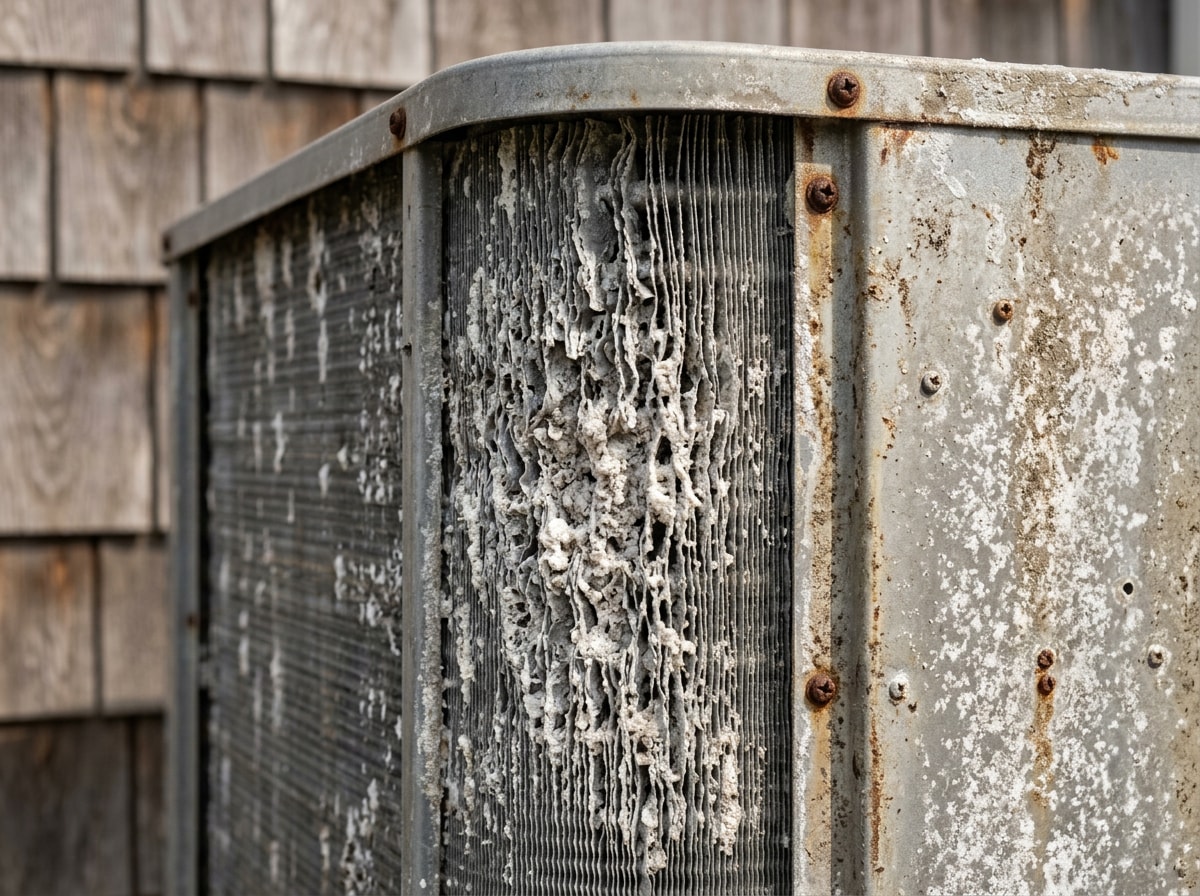
Two more that are specific to the East End: a condenser that looks chalky or pitted, and a system that ran fine in October but will not start after a winter of vacancy.
Subtle symptoms matter as much as a dead system. Calling early for air conditioning repair or heating system repair almost always keeps the invoice smaller.
Emergency HVAC Service: When It Cannot Wait
Some calls should not sit until Monday. Shut the system down and call for emergency HVAC service if you have:
- No heat when outdoor temperatures are below freezing
- No cooling during a heat advisory, especially with infants, elderly residents, or pets in the house
- A burning or electrical smell from any vent or panel
- Visible ice on refrigerant lines or the indoor coil
- Water actively running from the air handler onto finished floors
- Any suspected gas odor, which means you leave the house and call the utility first
Emergency coverage runs year-round, holidays included. Trucks carry common capacitors, contactors, motors, and control boards, so a large share of calls close on the first visit.
Seasonal and absentee owners can authorize work remotely after a property check, which matters in a town where a meaningful share of houses sit empty from November through May. Request service now and we will confirm a window the same day.
What HVAC Repair Costs in Montauk in 2026
These are 2026 ranges for the East End, not quotes. Only an on-site diagnostic produces a real number, and after-hours rates run higher.
| Repair | Typical 2026 range |
|---|---|
| Diagnostic / service call | $95 to $225 |
| Capacitor replacement | $150 to $450 |
| Contactor replacement | $175 to $400 |
| Condensate drain clearing | $150 to $400 |
| Condenser fan motor | $400 to $900 |
| Blower motor | $450 to $1,200 |
| Refrigerant leak locate and repair | $500 to $1,800 |
| Evaporator coil | $1,000 to $2,800 |
| Compressor | $1,500 to $3,500 |
| Mini-split head replacement (single zone) | $1,200 to $2,600 |
| Full central AC replacement | $6,000 to $14,000 |
Ask for an itemized estimate that separates diagnostic fee, parts, and labor. Ask whether the diagnostic is credited toward the repair, because many shops apply it and some do not.
Repair or Replace? A Rule That Works Here
Skip the guesswork and use a threshold. If the repair quote exceeds roughly one third of replacement cost and the system is past year 12, replacement usually wins. Two or more breakdowns in a single season push the math the same way.
Repair is the clear call when:
- The unit is under 10 years old
- One discrete component failed and the rest tests clean
- Parts are still covered by the manufacturer's warranty
- The refrigerant type is current and readily available
Replace when:
- The compressor has failed on an aging system
- You are quoted a coil plus a motor on the same visit
- The system uses R-22, which is no longer produced and expensive to source
- Corrosion has thinned the condenser cabinet or coil to the point that repairs will not hold
Field example from our own service log: an oceanfront condenser off Old Montauk Highway came in at year 11 with corroded coil fins and a seized fan motor. Two repairs totaled close to half the price of a new system on equipment already down several tons of capacity. Replacement was the better buy, and the new unit was spec'd with a coated coil for the salt exposure.
Federal Energy Saver guidance puts central air conditioner service life at roughly 15 to 20 years nationally. On the immediate Montauk shoreline, plan on the low end of that window. If replacement is where you land, review our HVAC installation options and see finished work on our projects page.
The Salt-Air Factor Most Guides Skip
Montauk sits on a peninsula with surf on three sides, and airborne chloride does not stop at the property line. It settles on aluminum fins and copper tubing, then holds moisture against the metal. The result is galvanic corrosion that shows up as white powder, pitted fins, and eventually refrigerant leaks at the return bend.
What this changes in practice:
- Rinse schedule. Outdoor coils here benefit from a plain freshwater rinse two to three times per cooling season, not once a year.
- Coil coatings. On new installs within a mile of the water, factory-applied coil coatings are worth the upcharge.
- Mounting hardware. Stainless fasteners and elevated pads outlast standard hardware in blowing sand.
- Earlier leak checks. Refrigerant leaks on coastal units frequently trace to corrosion, not workmanship, so a leak search should include the full coil face and not just the joints.
The Department of Energy's air conditioner maintenance guidance covers coil and drain upkeep, and coastal homes simply need it on a tighter cycle.
Common Problems We Repair on the East End
Most local calls trace back to a short list of faults. Knowing which one you likely have makes the quote easier to follow.
Restricted Airflow
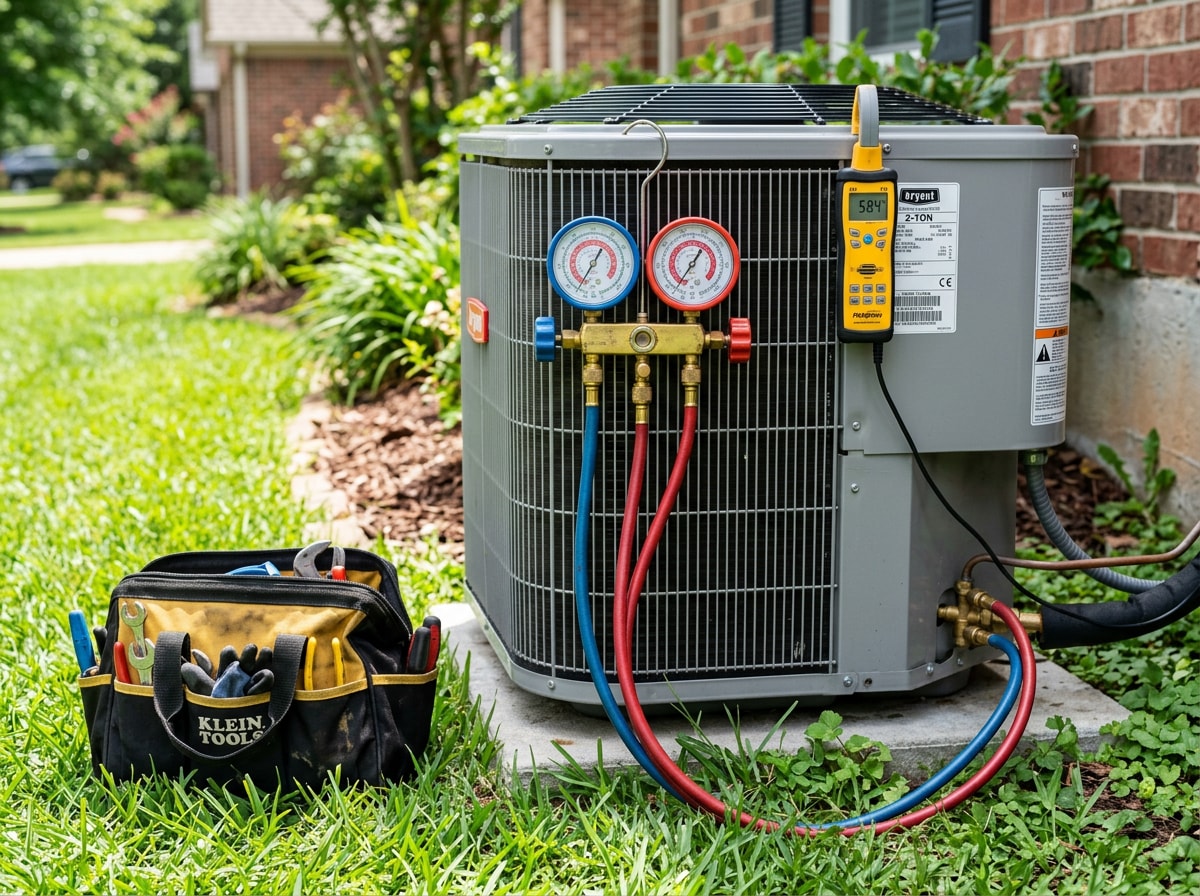
The evaporator coil needs steady air crossing it. When airflow drops, capacity drops and the coil can freeze.
Common causes indoors are a clogged filter, a failing blower motor, or a dirty evaporator coil. Outdoors it is usually a fouled condenser coil or a dying fan motor. Salt and blowing sand foul East End coils noticeably faster than inland units.
Refrigerant Leaks
Low charge means the system runs constantly and never hits setpoint. Recharging without finding the leak just repeats the failure in a few weeks.
Low refrigerant also drives compressor overheating and eventual failure. Shut the unit off and book a leak search. Under federal rules, only EPA Section 608 certified technicians may handle and recover refrigerant, and leaks are to be repaired rather than topped off indefinitely.
Electrical and Control Faults
Capacitors, contactors, and control boards fail more often in humid, salty air. Symptoms include a humming outdoor unit that will not spin, a system that trips the breaker, or a thermostat calling with no response.
Condensate and Drainage
Clogged drain lines back up into pans and onto ceilings. Algae growth accelerates in the humid summer months out here, which is why pan treatments are part of every tune-up.
Heating Faults
Oil and gas equipment on the East End often sits idle for months. Sticking oil valves, dirty burners, cracked heat exchangers, and failed igniters are the usual first-of-season findings. For a broader look at both sides of the system, our guide to air conditioning services in Montauk covers repair, install, and emergency workflow.
Ductless and Mini-Split Repair
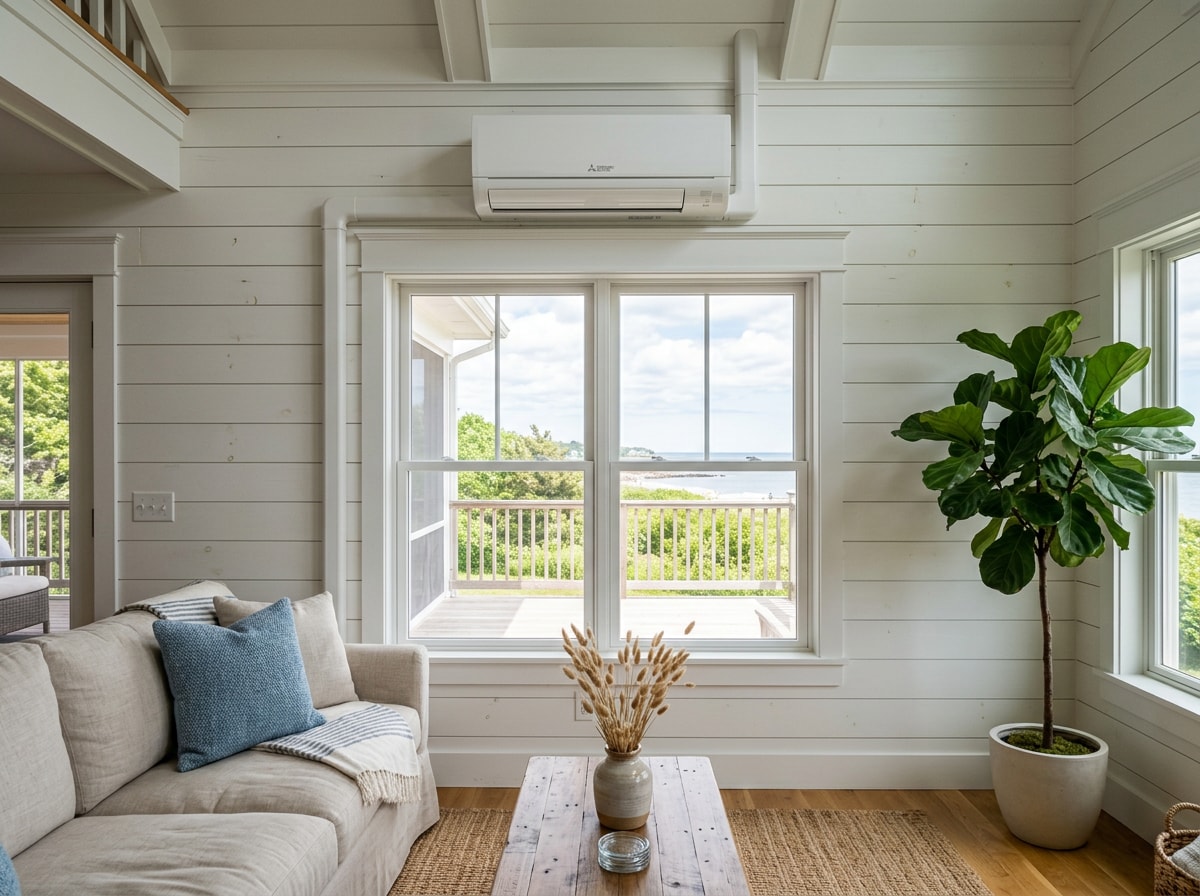
Mini-splits dominate Montauk's housing stock because so many cottages, converted summer homes, and renovated additions never had ductwork. They fail in their own particular ways:
- Clogged or algae-coated indoor filters and blower wheels
- Blocked condensate lines dripping down interior walls
- Failed indoor blower motors and control boards
- Corroded outdoor units and flare-fitting leaks
- Communication faults between indoor heads and the outdoor unit
Remember these are heating units too, which matters through the shoulder seasons when a head stops producing warm air in April or October. ENERGY STAR's ductless heating and cooling overview is a useful reference before any upgrade decision.
Rebates Worth Checking Before You Replace a Mini-Split
If a repair pushes you toward replacement, check incentives before signing. Montauk is in PSEG Long Island territory, one of the utilities participating in NYS Clean Heat, the statewide heat pump rebate program run by NYSERDA and the energy companies. Rebates are filed by a participating contractor and applied to your invoice, so eligibility needs to be confirmed before the job is scheduled, not after.
Is Your Equipment Still Under Warranty?
On a newer unit, scrapping it over a high quote can be the wrong move. Depending on warranty type, certain parts are covered outright or at a steep discount.
Have this ready before you call:
- Model and serial number from the data plate
- Installation date and original installing contractor
- Proof of product registration, if you registered it
- Maintenance records
Two catches worth knowing. Labor is usually not covered even when parts are. And skipping annual service can void coverage, because many manufacturers require documented yearly maintenance.
Maintenance That Actually Prevents Breakdowns
Regular service is the cheapest repair you will ever buy. Book on demand, or automate visits every six months through an HVAC maintenance plan with priority scheduling and parts discounts. Spring for cooling, fall for heating.
Each visit should cover:
- Thermostat testing and calibration
- Filter cleaning or replacement
- Evaporator and condenser coil cleaning
- Condensate pan and drain treatment
- Electrical connection inspection and tightening
- Lubrication of moving parts
- Refrigerant charge verification
- Static pressure and temperature split testing
Duct cleaning is done as needed, typically every three to five years in most homes. Curious what a plan covers and what it costs? Our breakdown of HVAC membership pricing is not on this page, so use the maintenance link above for scope and scheduling.
How to Vet a Montauk HVAC Repair Company
Summer demand on the East End brings in crews from far outside the area. Before you book:
- Confirm Suffolk County licensing and current insurance.
- Ask whether technicians hold EPA 608 certification.
- Ask for a written, itemized estimate before work begins.
- Confirm the after-hours rate in advance.
- Ask how long the parts and labor warranty runs on the repair itself.
- Ask whether the company services Montauk year-round or only in season.
That last one matters most. A contractor who disappears after Labor Day is no help when the boiler quits in February.
Service Areas and Full Service List
Our HVAC contractor services cover repair, installation, and maintenance on central air, furnaces, boilers, heat pumps, and ductless systems, plus ductwork, sheet metal fabrication, and duct cleaning.
We serve Montauk, East Hampton, the broader Hamptons, and all of Suffolk County. Start at our homepage for the full service map.
Ready to book? Get a free estimate and we will schedule a diagnostic visit.
FAQ
How much does HVAC repair cost in Montauk?
Most repairs land between $150 and $1,200, with an average around $350 to $450 once the diagnostic fee is included. Compressor and coil work runs higher, from $1,000 to $3,500. After-hours and holiday calls carry a premium.
Is it worth repairing a 15-year-old AC?
Usually not, if the quote exceeds a third of replacement cost. At 15 years on the Montauk shoreline, corrosion is often present beyond the failed part, and efficiency is well below current equipment. A single cheap fix like a capacitor is still worth doing.
How long does an HVAC repair take?
Simple electrical and drain repairs take one to two hours. Motor and board swaps take two to four hours if the part is on the truck. Coil and compressor work is usually a half day or more, and may require a return visit if the part must be ordered.
Do you offer same-day or emergency AC repair?
Yes. Emergency dispatch runs 24/7, year-round. No heat in freezing weather, no cooling in a heat advisory, burning smells, and active water leaks are all treated as emergencies.
How often should an HVAC system be serviced?
Twice a year: spring for cooling, fall for heating. Expect roughly $75 to $200 per visit, or about $150 to $500 annually on a plan. Coastal homes should add freshwater coil rinses between visits.
How long do HVAC systems last?
Federal Energy Saver guidance puts central air conditioners at 15 to 20 years, and furnaces commonly run 15 to 30. Salt exposure pulls Montauk equipment toward the low end of both ranges.
Are HVAC repairs covered by a home warranty or homeowners insurance?
Home warranties sometimes cover AC and heating repairs, but coverage varies by plan, so read the contract and expect a service call fee. Homeowners insurance generally does not cover wear-and-tear failures, though it may cover damage from a covered event such as a lightning strike. Both are separate from the manufacturer's equipment warranty.
Why does my AC run but not cool?
The most common causes are a dirty filter or coil, low refrigerant from a leak, a failed capacitor, or a frozen evaporator coil. Turn the system to fan only for an hour to thaw any ice, then book a diagnostic rather than adding refrigerant.
Who do I call when my AC stops working in Montauk?
Call a Suffolk County licensed HVAC contractor with EPA 608 certified technicians who services the East End year-round. Contact our team for a diagnostic appointment.
---
This guide was prepared by the field service team at Amonte HVAC, EPA Section 608 certified and licensed and insured in Suffolk County, drawing on repair and replacement work performed on Montauk, East Hampton, and Amagansett properties. Pricing reflects 2026 East End ranges and is not a quote. Questions about a specific system? Reach us here.