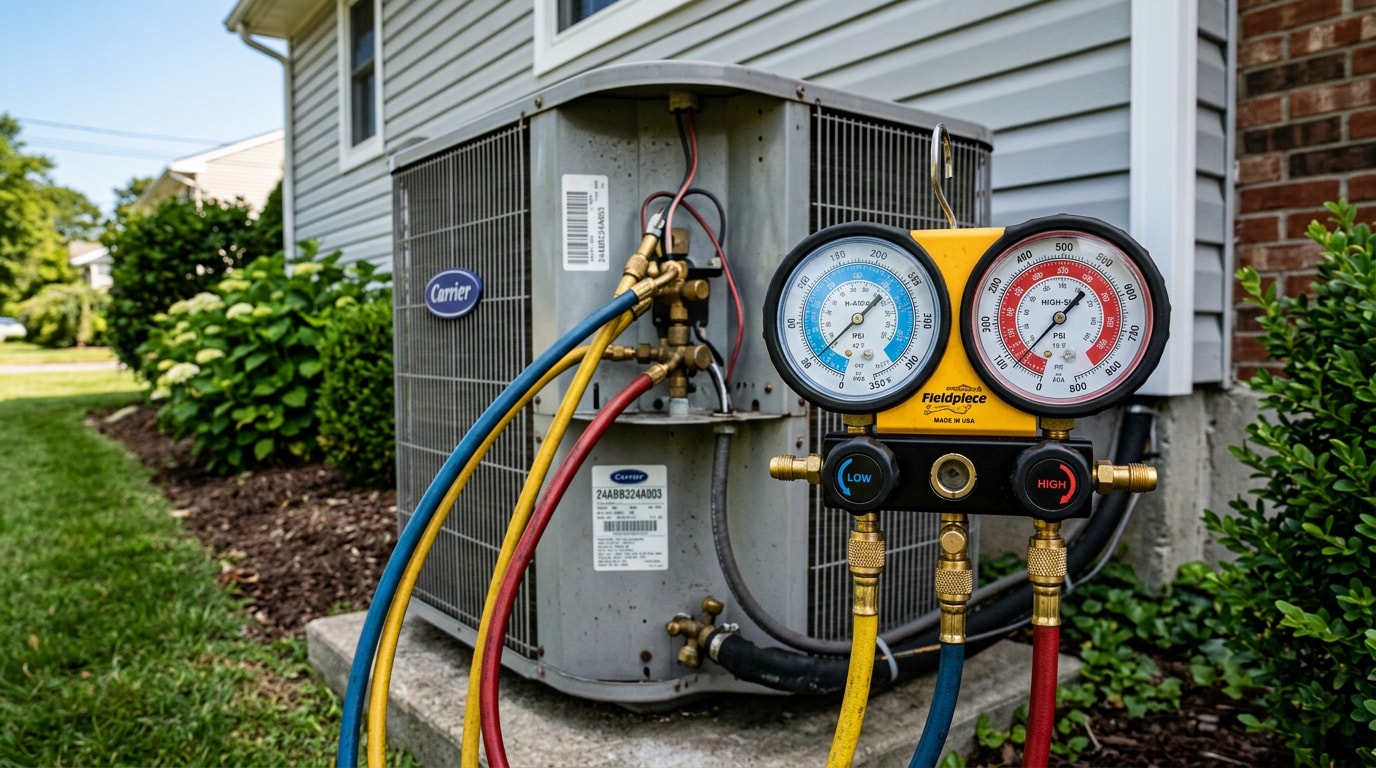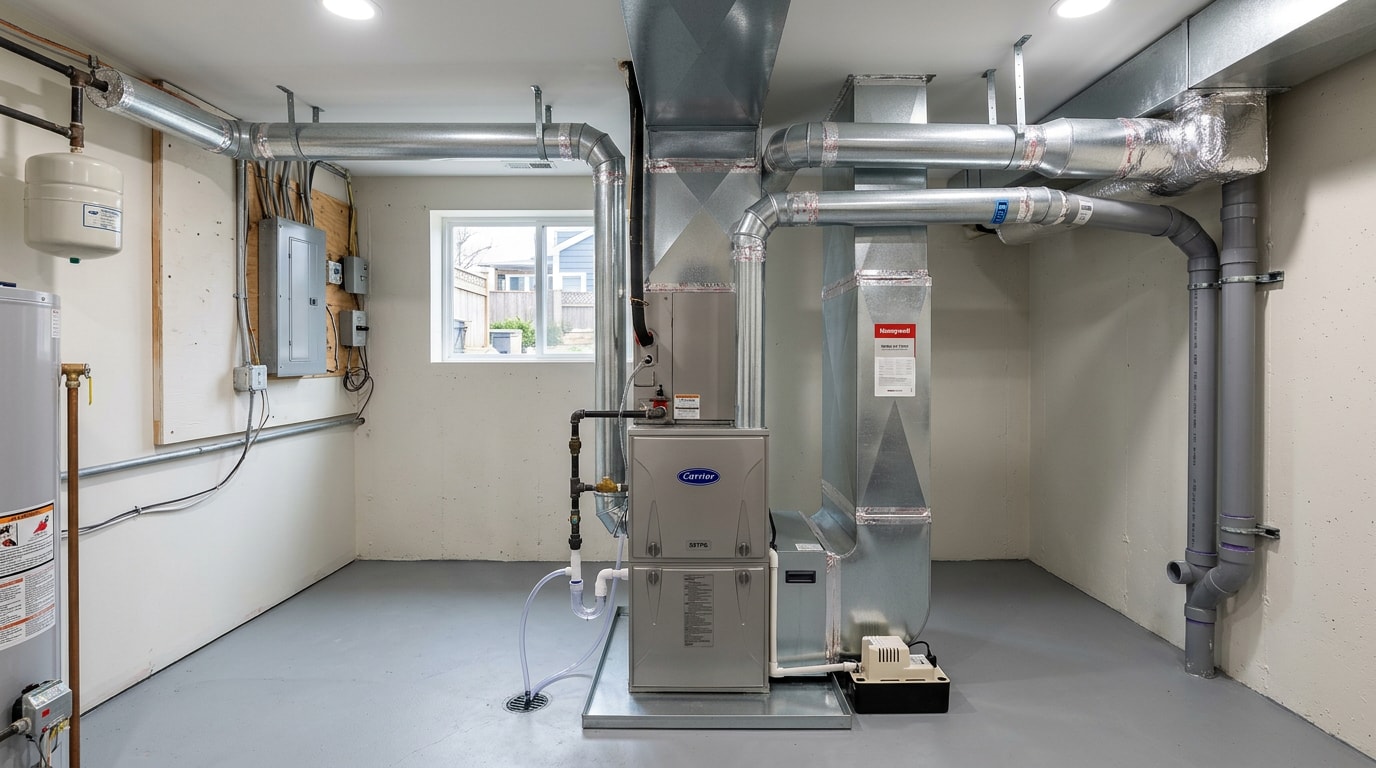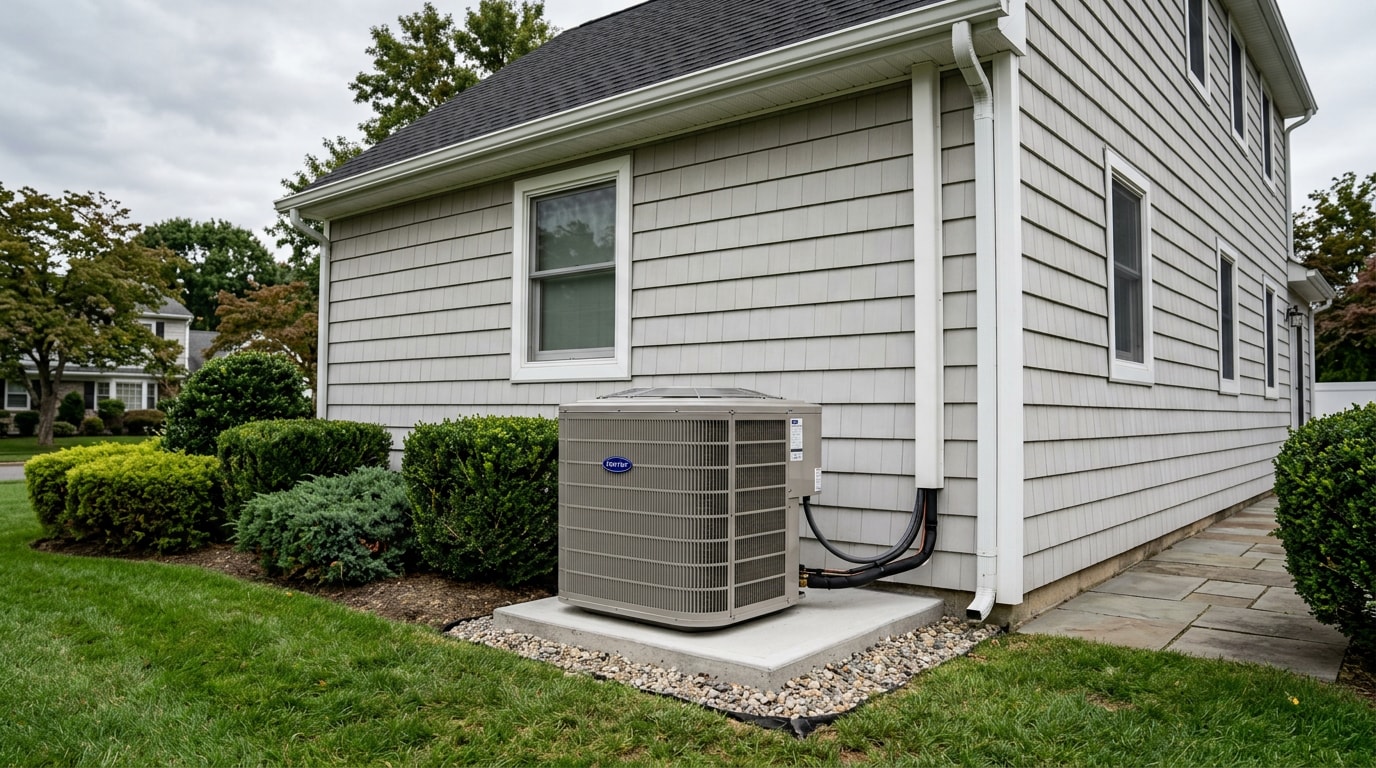
Air and heating repair on Long Island, NY usually starts the same way: a furnace that goes quiet on a 20 degree night, or vents blowing lukewarm air on the third day of a July heat wave. This guide covers the warning signs worth acting on, real 2026 price ranges across Nassau and Suffolk, and a repair-or-replace rule you can apply in five minutes. It also covers the 2026 federal refrigerant change that quietly moved the math on older air conditioning systems.
Signs Your HVAC System Needs Repair
A system that still technically runs can still be failing.
Most breakdowns announce themselves for weeks before the equipment quits. Ignoring those signals is the fastest route to a no-heat night and a bigger invoice.
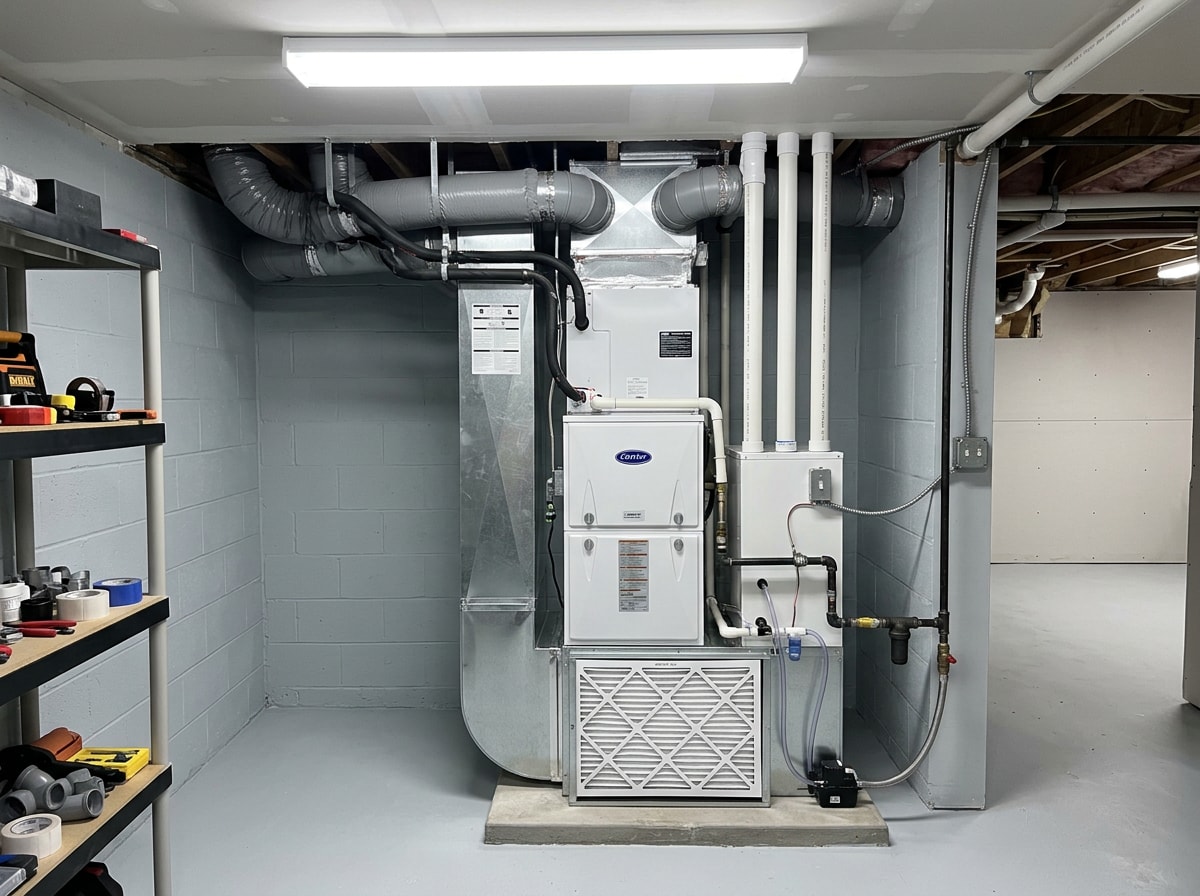
Strange Noises
A healthy furnace or air handler runs as background noise. Four sounds matter most:
- Banging: delayed ignition or a loose blower wheel
- Grinding or scraping: worn motor bearings or metal on metal contact
- Squealing: a slipping belt or a failing blower motor
- Rattling: loose panels, screws, or duct connections
Note when the noise happens. Startup, mid cycle, and shutdown each point at different parts, and that timing narrows the diagnosis fast.
Catching a bearing early is a repair. Catching it late is a motor replacement.
Rising Energy Bills
Utility costs rarely climb for no reason. When they do, the system is running longer to hit the same thermostat setting.
Compare your bill to the same month last year, not to last month. December to January swings on weather alone.
A 20 to 30 percent year over year jump at similar temperatures is a genuine flag. Dirty coils, a weak capacitor, duct leakage, and a mistimed control board all produce that pattern.
Weak Airflow and Uneven Temperatures
These are two complaints that usually travel together. Weak airflow means no register in the house reaches full blast. Uneven heating means the thermostat reads 70 while the back bedroom sits at 62.
Common causes:
- Leaky or disconnected ductwork
- A weakening blower motor
- A failing zone damper or control board
- Blocked or undersized return vents
- A clogged filter starving the blower
Here is the detail worth writing down. If the same rooms go cold every single winter, that is a repeating pattern, not a fluke. Handing a technician that history shortens diagnostic time, and diagnostic time is billable.
Air and Heating Repair Costs on Long Island in 2026
Most repairs land in a predictable band. The ranges below reflect typical 2026 residential pricing across Nassau and Suffolk, reviewed January 2026.
| Repair | Typical Long Island range | Usually same visit? |
|---|---|---|
| Diagnostic fee | $85 to $150 (often credited to the repair) | Yes |
| Igniter or flame sensor | $150 to $400 | Yes |
| Capacitor or contactor | $150 to $350 | Yes |
| Thermostat replacement | $200 to $500 | Yes |
| Inducer motor | $400 to $800 | Usually |
| Blower motor | $450 to $900 | Usually |
| Refrigerant leak repair | $500 to $1,500 | Sometimes |
| Compressor replacement | $1,500 to $3,000+ | No |
| After hours or holiday surcharge | $75 to $250 added | n/a |
Several legitimate factors move a quote inside those ranges:
- Which component failed and how buried it is
- Labor and diagnostic time
- Parts availability for older or discontinued models
- Whether the part is still under manufacturer warranty
- Whether you call at 2 p.m. Tuesday or 2 a.m. Sunday
Worked example. Your furnace locks out on a Saturday night. The technician charges a $125 diagnostic fee, finds a failed inducer motor, and installs a $575 replacement. The weekend surcharge adds $150. The diagnostic is credited toward the repair, so the invoice is $725, not $850.
Treat every figure as an estimate. Site conditions, permits, and equipment age all shift the number, so insist on a written price after diagnosis and before any work starts.
You can compare scopes on our heating system repair and air conditioning repair pages, or get a free estimate before you commit to anything.
What Counts as an HVAC Emergency?
Not every fault needs a midnight visit. A true emergency involves a safety risk or a habitability problem:
- Total loss of heat during freezing weather
- Total loss of cooling during a heat wave
- Burning, scorching, or electrical smells
- A gas smell anywhere near the equipment
- A breaker that trips repeatedly on startup
- Visible smoke or soot
If it is safe to do so, shut the system down at the switch or breaker. Ventilate the area if you suspect smoke. If the gas odor is strong, leave the building first and call from outside.
Do not keep restarting equipment that has already faulted. Repeated restarts can turn a repairable failure into a replacement.
Risk rises sharply for elderly residents, infants, pets, and anyone with a respiratory or cardiac condition. In those households, uncomfortable becomes urgent much faster, and 24/7 emergency HVAC service is the right call.
The Failures We See Most Often Across Nassau and Suffolk
Across the Island, the recurring failures are cracked heat exchangers, failed inducer motors, worn igniters, dirty flame sensors, clogged pressure switches, tired blower motors, and nozzle or oil filter replacements on oil fired systems.
The pattern is not random. Older housing stock, a mixed oil and gas installed base, and salt air near the water produce predictable wear. Two failures stand out: one for safety, one for cost.
Cracked Heat Exchanger
The heat exchanger separates combustion gases from the air circulating through your home. When it cracks, that barrier fails and combustion byproducts, including carbon monoxide, can enter the ductwork.
Watch for:
- A burner flame that flickers or shifts when the blower starts
- A yellow flame instead of a steady blue one
- Soot around the cabinet or flue
- A CO detector alarm
Carbon monoxide is not a wait and see problem. CPSC reports that more than 200 people die each year from unintentional, non fire carbon monoxide poisoning tied to consumer products, with heating equipment among the top contributors, and it urges a yearly professional inspection of all fuel burning home heating systems , including furnaces, boilers, water heaters, chimneys, flues and vents. CPSC also recommends CO alarms on each level of the home, outside each sleeping area.
A confirmed crack is a shutdown, not a next week appointment. Cracks become markedly more common on furnaces past roughly 15 years old, and an honest technician will condemn the unit rather than patch it.
Failed Inducer Motor
The inducer motor pulls combustion gases through the heat exchanger and out the flue before the burners light. If the pressure switch never confirms that draft, the control board blocks ignition.
That is why the furnace hums or clicks, tries to start, then locks out without heat.
The symptom scares people, but the fix is usually straightforward. Caught early, inducer replacement is often a same day repair, with the part commonly stocked for popular brands. Let it run seized and noisy for a season and you risk taking the control board with it.
Repair or Replace: How to Decide
The published rules do not all agree, so here they are side by side.
| Rule of thumb | What it says | Best used when |
|---|---|---|
| The 50% rule | Replace if the repair costs more than half of new equipment | Equipment is 10 to 15 years old |
| The 25% to 50% threshold | Replace at a lower repair ratio on aging units | Equipment is past 15 years |
| Age and cost combined | Multiply repair cost by equipment age; over $5,000 leans replace | Quick gut check on a quote |
For service life, plan on 10 to 15 years for central air and 15 to 20 years for a well maintained furnace. ENERGY STAR advises calling a contractor about replacement once a heat pump or air conditioner passes 10 years, and once a furnace or boiler passes 15 years , and its page on when it is time to replace lists frequent repairs and rising bills as separate triggers.
Translated into Long Island numbers: a repair quote past roughly $1,500 to $2,000 on equipment that is already 15 years or older generally favors replacement.
Timing matters as much as math. A planned replacement in May lets you collect three quotes and negotiate. An emergency replacement in January removes your leverage and adds a rush premium. If you are already comparing installers, our guide to vetting HVAC replacement companies walks through the questions that actually separate bids.
The 2026 Refrigerant Detail Most Cost Guides Missed
If your AC runs R-410A, 2026 changed the calculus, and not in the direction most homeowners were told.
Manufacturing of new residential R-410A split systems ended January 1, 2025, and the industry moved to lower GWP A2L refrigerants such as R-454B and R-32. Then the rules shifted again. EPA published a final rule allowing continued installation in homes of HVAC units manufactured or imported before January 1, 2025 that use R-410A, until existing supplies are depleted, effective July 27, 2026 . The National Association of Home Builders summarized the change in its note on the EPA refrigerant final rule, pointing out that before the amendment, contractors could not install pre 2025 higher GWP split systems after January 1, 2026 .
What that means for a repair decision on Long Island right now:
- Servicing an existing R-410A system is still legal. You are not required to replace a working unit.
- R-410A supply is tightening under the federal HFC phasedown, so top offs on a leaking system get more expensive each season.
- Paying $1,200 to chase a refrigerant leak on a 16 year old condenser is usually money spent on a system you will replace anyway.
- A leak repair on a 6 year old unit is still worth doing.
That is the practical split we use in the field: age of the equipment decides whether a refrigerant repair is an investment or a stall. Our HVAC installation page covers replacement options if the numbers point that way, and you can see completed system swaps in our project gallery.
Oil vs. Gas Systems on Long Island
Long Island still runs a large installed base of oil heat alongside natural gas, and that changes the repair picture in concrete ways.
Oil systems need routine nozzle and oil filter replacement. Those are consumables that gas furnaces simply do not have.
Oil burner work also requires specific training and certification, which narrows the pool of available companies. That affects both scheduling during a cold snap and what you pay for the visit.
Then there is the coast. Salt air accelerates corrosion on cabinets, flue piping, condenser coils, and heat exchangers. On South Shore and North Fork calls we routinely pull condenser cabinets with rusted base pans on units barely past 12 years, while comparable inland equipment still looks clean. Homes in Oyster Bay, Mount Sinai, and the Hamptons show it earliest.
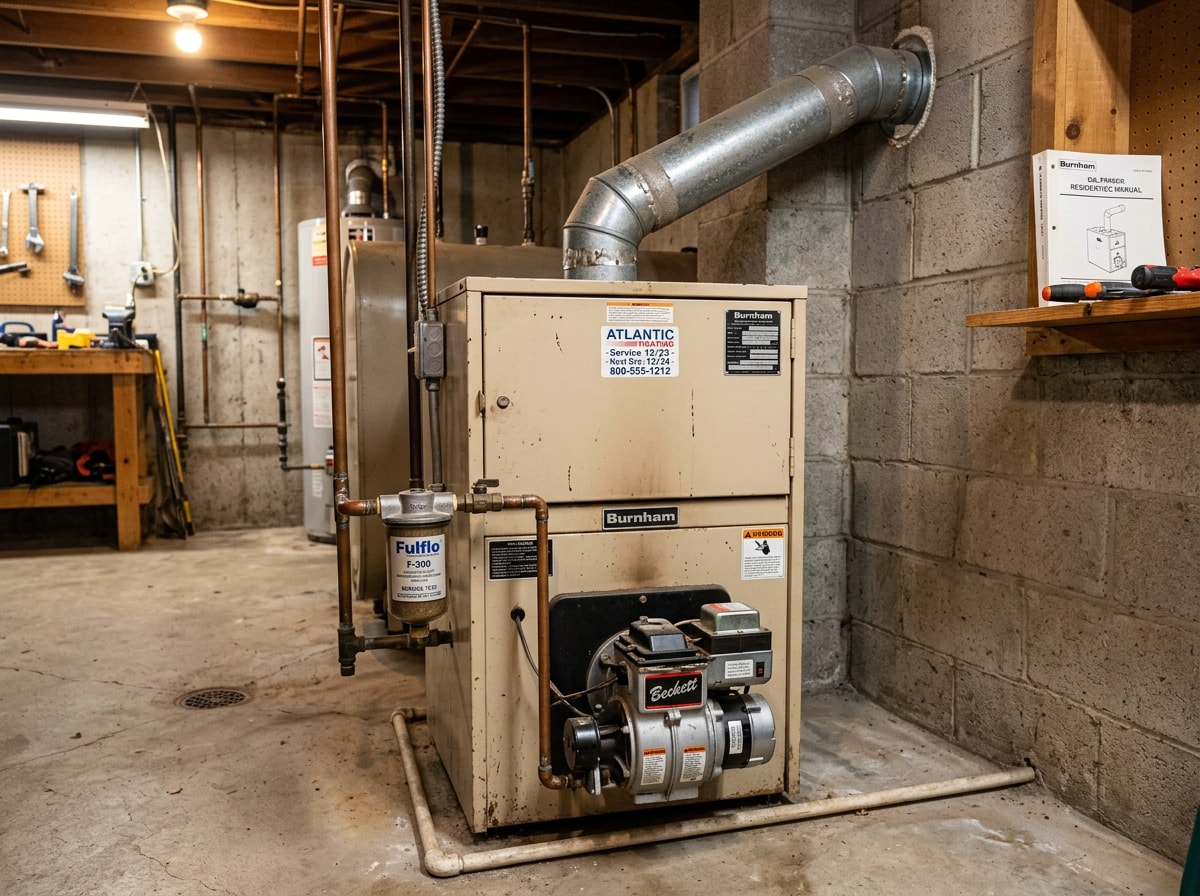
If you heat with oil, confirm three things when booking:
- The company services oil burners specifically, not just gas.
- The technician carries nozzles and filters for your burner model.
- Your tank and supply lines get inspected on the same visit.
While the technician is down there, it is worth asking about the tank next to the furnace too. Water heater repair and boiler work often share the same flue and the same corrosion problems.
How to Prevent the Next Emergency
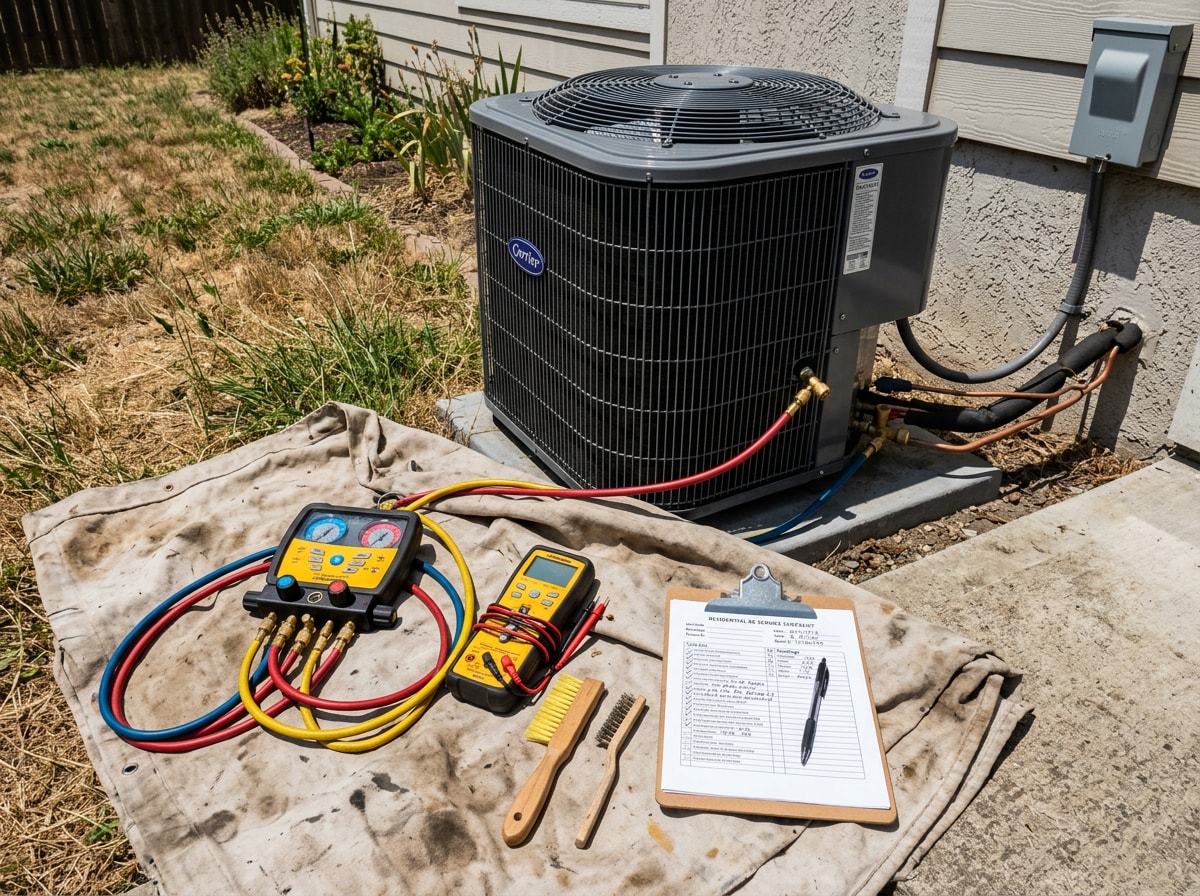
Most emergencies are preventable. The professional standard is two visits a year, spring for cooling and fall for heating, because combustion testing, electrical checks, and refrigerant readings catch failures while they are still cheap. ENERGY STAR makes the same recommendation, noting contractors get busy once summer and winter arrive.
Your side of the job is simpler:
- Change filters every 1 to 3 months depending on type and household
- Keep supply and return registers clear of furniture and rugs
- Trim shrubs and debris back from the outdoor condenser
- Act on small faults immediately instead of waiting them out
The Department of Energy's guidance on air conditioner maintenance explains why the filter matters most: dirty, clogged filters reduce airflow and efficiency, and when airflow is obstructed dirt bypasses the filter and collects on the evaporator coil, reducing its heat absorbing capacity . DOE also recommends keeping the area around the condenser clean and trimming foliage back at least two feet.
Two benefits get overlooked. A system that is not overworking costs less to run every month, which offsets part of the tune up price. And many manufacturers require documented annual service to keep the parts warranty valid, so skipping it can turn a $900 covered claim into a $900 bill.
One local scheduling note: book heating work in spring or summer. Availability is far better than during the October rush, and you get your pick of appointment windows. An HVAC maintenance plan handles that scheduling for you.
Choosing a Repair Company on Long Island
Ask five questions before anyone touches the equipment:
- Is the diagnostic fee credited toward the repair?
- Will I get a written price before work starts?
- Do you service my fuel type, including oil burners if applicable?
- What warranty covers the part and the labor?
- Are you licensed in Nassau or Suffolk for this scope of work?
Nassau and Suffolk license home improvement and HVAC work at the county level, and permits may be required for equipment replacement depending on your town. A contractor who cannot answer question five quickly is the wrong contractor.
We cover Long Island broadly, including Nassau County, Suffolk County, East Hampton, and Montauk. You can see our full range of work on the HVAC contractor services page or start at our Long Island HVAC homepage.
FAQ
What are the common signs my heating system needs repair?
Unusual noises, weak airflow, uneven room temperatures, short cycling, and rising utility bills are the five clearest signs. Do not ignore them in summer just because the heat is off. A fault found in July is a scheduled appointment. The same fault in January is an emergency call.
How much does HVAC repair cost on Long Island?
Most common repairs run $150 to $900. Major component work such as compressor replacement reaches four figures. Diagnostic fees typically run $85 to $150 and are often credited toward the repair.
How much is an HVAC service call, and is the fee refunded?
Expect $85 to $150 during normal business hours, plus $75 to $250 more for nights, weekends, and holidays. Many companies, including ours, credit the diagnostic toward the repair if you approve the work. Confirm that in writing before the visit.
When should I replace my system instead of repairing it?
Replace when the repair quote exceeds about half the cost of new equipment, especially on systems over 15 years old. Other triggers include repeated breakdowns in one season, bills climbing year over year, and a refrigerant that is getting expensive to source.
Is it worth repairing a 15 year old furnace?
Sometimes. A $300 igniter or flame sensor on a furnace that still passes a combustion test is worth doing. A $1,500 heat exchanger or blower assembly on the same unit is not. Get the combustion and safety test results first, then decide.
Can I still get R-410A refrigerant for my air conditioner in 2026?
Yes. Servicing existing R-410A equipment remains legal, and you are not required to replace a working system. Supply is tightening under the federal HFC phasedown, so expect refrigerant costs on older systems to keep rising.
How long does a typical repair take?
Most stocked part replacements, such as igniters, capacitors, contactors, and thermostats, are done in one visit of one to three hours. Motors and inducers are usually same day if the part is on the truck. Compressors, coils, and leak repairs often need a return trip.
Do you offer 24/7 emergency HVAC repair on Long Island?
Yes. We provide emergency service across Nassau and Suffolk, including nights, weekends, and holidays, with same day service whenever the schedule allows. Contact our team to confirm coverage for your town and get a technician dispatched.
How do I keep this from happening again?
Two professional visits a year plus filter changes every one to three months prevent most no heat and no cool calls. Book heating service in spring or summer when availability is best.
---
Get a Free Estimate. Tell us what the system is doing, the make and age if you know it, and your town. We will give you a written price after diagnosis, before any work starts. Request your free estimate.
Written and reviewed by the service team at Amonte HVAC, EPA Section 608 certified technicians working in Nassau and Suffolk County homes year round. Questions on a quote you already received? Send it over through our contact page and we will tell you what we would do.