Finding an emergency HVAC contractor in Long Island, NY at 11 p.m. is less about who has the flashiest truck and more about who answers, who is licensed, and who can tell you the price before they start. This guide gives you the triage test we use on our own dispatch line, 2026 after-hours cost ranges, and the three-minute license check that separates a real contractor from a weekend handyman. Start here before you pay an after-hours premium you may not need.
Is This Actually an HVAC Emergency, or Can It Wait Until Morning?
The question you are really asking is whether to pay after-hours rates tonight or book a morning slot.
The test is simple: does the failure threaten health, safety, or property? If any one of the three is on the line, call now. If none are, a morning appointment usually fixes the same problem for less money.
| Symptom | Likely cause | Call now or wait? |
|---|---|---|
| Gas or rotten egg smell | Leaking valve, fitting, or burner | Leave the building, then call from outside |
| CO alarm sounding | Cracked heat exchanger, blocked flue | Evacuate, call 911 first |
| No heat, outdoor temps under 40F | Igniter, flame sensor, control board | Call now |
| No cooling during a heat advisory | Capacitor, contactor, compressor | Call now if anyone is elderly, very young, or medically vulnerable |
| Water pouring from the air handler | Clogged condensate drain, failed pump | Call now if it is hitting drywall or ceilings |
| Burning electrical odor | Motor or wiring failure | Kill the breaker, call now |
| Frozen evaporator coil | Low refrigerant or blocked airflow | Shut it off, let it thaw, call in the morning |
| Grinding, screeching, short cycling | Blower bearing, sensor, airflow fault | Morning is fine |
| Breaker trips once and resets fine | Nuisance trip | Morning is fine |
Carbon monoxide deserves its own line. CO is an odorless, colorless gas that can cause sudden illness and death if inhaled, and it is produced any time fuel burns in stoves, grills, fireplaces, gas ranges, or furnaces. If the alarm sounds, get everyone outside first and call from the yard. The CDC's carbon monoxide basics page lists the symptoms worth knowing before you ever need them.
Heat is the mirror image. The National Weather Service simplified its heat watches and warnings in 2025, after the contiguous U.S. recorded its hottest year on record and as heat waves grow more frequent. If an Extreme Heat Warning is posted and a vulnerable household member is inside, a dead condenser is a safety call, not a comfort call. The NWS heat safety hub explains what each alert level means.
What Breaks Most Often on Long Island After Hours
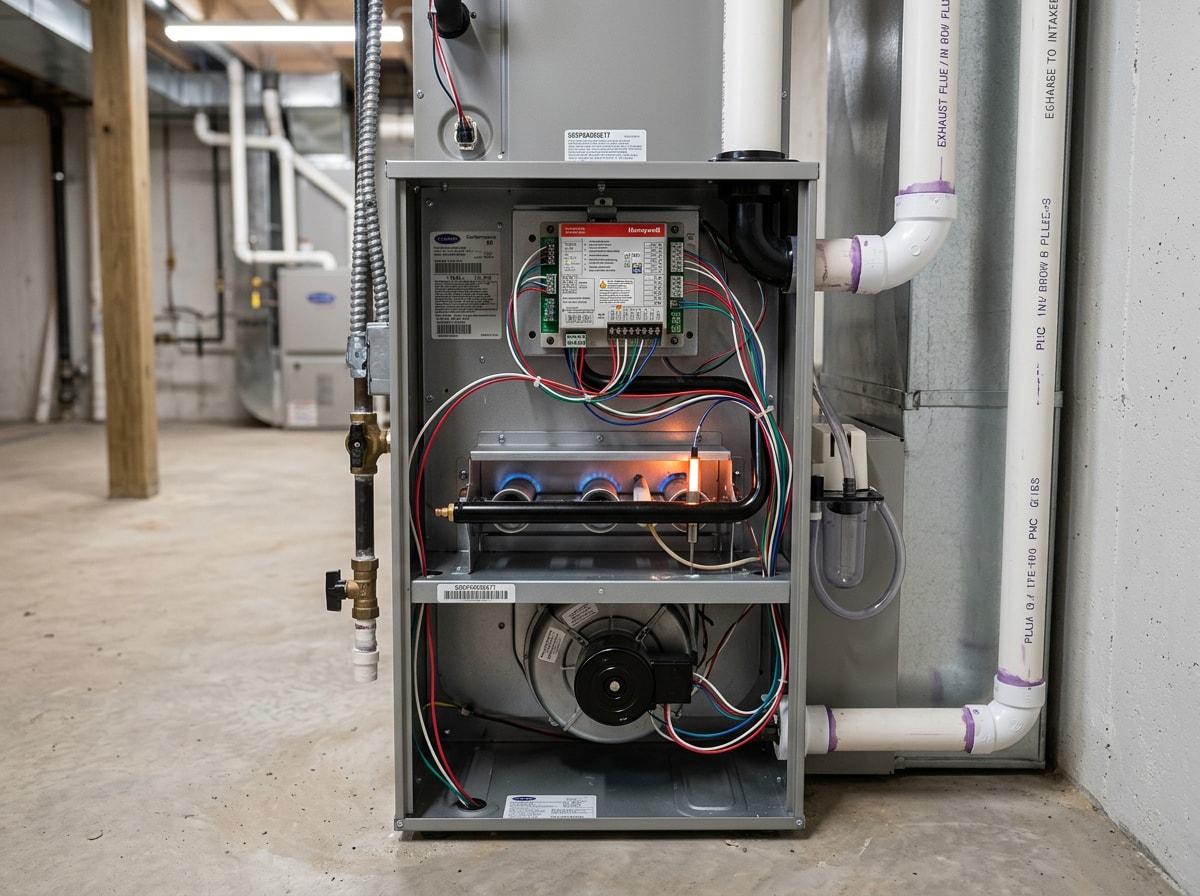
Here is the part most contractor pages leave out. Across our own after-hours winter calls, the repairs that resolve the largest share of no-heat tickets are a short list, and it rarely changes:
- Flame sensors fouled with carbon, which is a cleaning, not a part
- Hot surface igniters cracked at the end of a cold snap
- Oil burner nozzles and cad cells on the older oil systems still common from Massapequa to Mattituck
- Zone valves and circulator pumps on hydronic baseboard
- Control boards that locked out after a PSEG Long Island power blink during a storm
That last one matters locally. A brief outage or voltage sag can leave a furnace or boiler in a soft lockout. In some cases a single power cycle at the service switch brings it back, which is why our dispatcher will walk you through a reset attempt before sending a truck at 1 a.m. We would rather lose the call than charge you for a breaker flip.
On the cooling side, the repeat offenders are run capacitors, contactors with pitted points, and condensate overflow switches tripped by a slimed drain line. All are stocked parts. Compressor and coil failures are the ones that turn into next-day jobs, because they depend on supply houses opening.
Emergency HVAC Repair Costs on Long Island in 2026
Your bill has three parts: a diagnostic fee, an after-hours premium, then parts and labor. Ask for all three on the phone before you agree to the visit.
| Line item | Typical 2026 range on Long Island | Notes |
|---|---|---|
| Diagnostic or trip fee | $95 to $195 | Often credited toward the repair |
| After-hours premium | Roughly 15% to 30% over daytime rates | Higher on Sundays and holidays |
| Igniter, flame sensor, capacitor, contactor | $200 to $450 installed | Usually first-visit fixes |
| Circulator pump, zone valve, oil nozzle and filter | $300 to $700 installed | Hydronic and oil systems |
| Control board | $500 to $1,100 | Brand and availability dependent |
| Heat exchanger or compressor | $1,500 and up | Often a replace-versus-repair conversation |
These are planning ranges from Long Island jobs, not quotes. Equipment age, access, refrigerant type, and parts availability move them. Any contractor who gives you a firm number before seeing the system is guessing.
If the repair quote starts climbing past a third of replacement cost on equipment over 15 years old, pause and price both paths. Our HVAC installation) page covers what a planned replacement involves, and you can see finished work on our projects) page.
Correction on the links above, use these: HVAC installation and completed projects.
Get a Free Estimate if you want the repair-or-replace math in writing before the next cold snap.
How to Vet an Emergency HVAC Contractor in Three Minutes
At 2 a.m. you will not read reviews for an hour. Run these checks instead.
- Ask who is answering. A dispatcher who can confirm your town, your equipment type, and tonight's rate is a company. A call center reading a script is a lead broker who will sell your number.
- Confirm the county license.
Home improvement contractors must be licensed in Suffolk, Nassau, New York City, Westchester, Putnam, and Rockland counties.
In Suffolk you can call the Office of Consumer Affairs at 631-853-4600 to confirm a contractor is licensed and check complaint history. The county's consumer affairs licensing page lists which trades require a license.
- Ask for refrigerant certification.
EPA rules under Section 608 of the Clean Air Act require technicians who maintain, service, repair, or dispose of equipment that could release refrigerants to be certified by passing an EPA-approved test. Details are on the EPA Section 608 requirements page.
- Get the fee structure verbally, then in writing. Diagnostic fee, after-hours premium, whether the fee is credited.
- Refuse open-ended authorization. "Approve the diagnosis, then approve the repair" is the correct sequence. Never approve "whatever it takes."
- Ask about insurance certificates.
If a worker is injured or your property is damaged, you can be held liable when the contractor is not properly insured.
Write these six down and tape them inside a kitchen cabinet. The night your heat dies is not the night you will think clearly.
What to Do in the 20 Minutes Before the Technician Arrives
- Clear a path to the equipment, including the basement stairs and the attic hatch.
- Put a light near the unit. Many Long Island mechanical rooms have one bulb and a dead pull chain.
- Note the error code or blinking LED pattern on the control board and tell dispatch. It can change which parts the tech loads.
- For a water leak, shut the system off and place a bucket, then towel the pan area.
- For a frozen coil, switch the system to fan only so it thaws faster.
- Find your last service invoice. Model and serial numbers save real time.
- In a no-heat call during a freeze, open cabinet doors under sinks on exterior walls and let a faucet drip. Frozen pipes cost far more than the repair you are waiting on.
Our 4-Step Emergency Response Across Nassau and Suffolk
- Live intake. A person answers, confirms your address, and quotes the diagnostic fee and any after-hours premium on the phone.
- Dispatch. We send a cross-trained technician so one visit covers heating or cooling, with no second appointment to diagnose the other side.
- On-site diagnosis and written quote. The tech tests the system, identifies the failed component, and puts the repair price in writing.
- Repair after your approval. Nothing gets touched until you approve the number.
Our on-call team covers gas and oil furnaces, boilers, heat pumps, central air, ductless mini-splits, packaged rooftop units, air handlers, and thermostats. Full details live on our emergency HVAC service page, while planned work is organized under our HVAC contractor services.
Need a specific repair rather than an after-hours visit? Start with heating system repair or air conditioning repair. For a deeper breakdown of symptoms and 2026 pricing, read our guide to air and heating repair on Long Island.
Commercial Emergency HVAC Service
A commercial failure costs more than comfort. Staff go home, customers walk out, tenants call, and temperature-sensitive inventory starts a countdown.
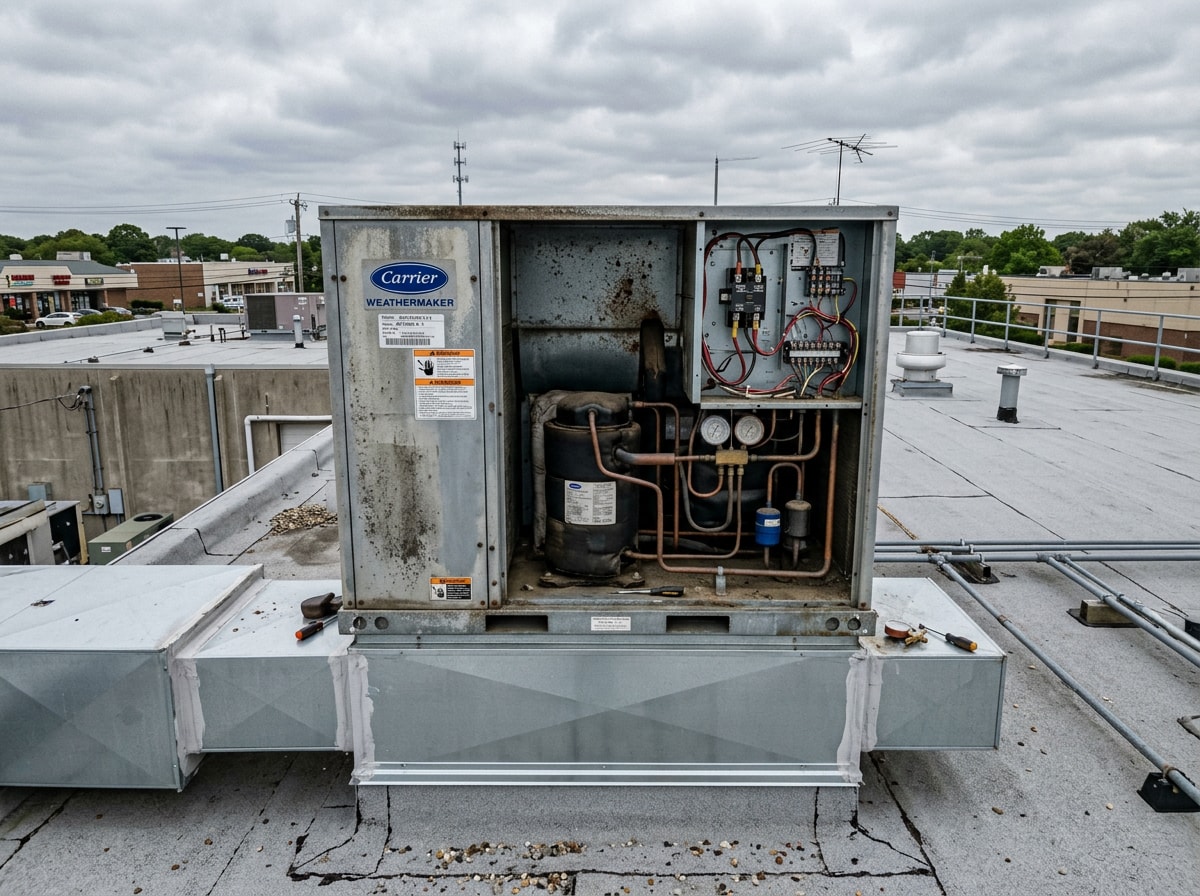
Our after-hours commercial work covers rooftop units, packaged systems, and light commercial splits. Restaurants and medical offices get priority routing, because their losses compound fastest. Larger buildings and multi-unit properties are handled through our HVAC contractor team.
Areas We Serve
We dispatch across both counties, and we are honest about drive times.
- Nassau County: Great Neck, Port Washington, Oyster Bay, Rockville Centre, Freeport, Massapequa. See Nassau County service details and Oyster Bay.
- Suffolk County: Huntington, Northport, Smithtown, Babylon, Bay Shore, Patchogue, Mount Sinai, Riverhead. See Suffolk County and Mount Sinai.
- East End: Southampton, East Hampton, Montauk, and the broader Hamptons.
East End response runs longer than western Nassau, especially on summer weekends when Route 27 is parked. We tell you that on the call instead of after you have waited three hours. Coverage maps are on our Long Island service area page, and you can learn more about the company on our homepage.
How to Avoid the Next 2 a.m. Call
Most emergency tickets we run were preventable, and the pattern is boring: dirty flame sensors, slimed condensate lines, weak capacitors, and filters nobody changed since the last contractor touched the system.
- Service heating in early fall, cooling in early spring, before the rush.
- Change filters on a calendar reminder, not by memory.
- Pour a cup of distilled vinegar down the condensate trap each spring.
- Replace a run capacitor reading below tolerance now, not in August.
- Keep a CO alarm on every level, near sleeping areas.
A maintenance plan costs less than one after-hours premium. See what is covered on our HVAC maintenance page. If your hot water went cold the same night the heat quit, that is often a shared boiler issue, and our water heater repair team handles it.
FAQ
How fast can a technician reach my Long Island home?
Four things set the arrival window: distance from the nearest on-call tech, the hour, the weather, and call volume. During a hard freeze or an Extreme Heat Warning, every contractor on the Island is backed up. We quote a realistic window on the phone rather than a best-case promise, and we call again if it slips.
How much is an emergency HVAC call-out fee?
Expect a diagnostic fee in the $95 to $195 range plus an after-hours premium of roughly 15% to 30%, higher on Sundays and holidays. Ask whether the diagnostic fee is credited toward the repair. Many contractors credit it, some do not, and that single question can swing the bill by $150.
Is no air conditioning an emergency?
Usually not on its own. It becomes one during an Extreme Heat Warning or when an infant, an older adult, or someone with a chronic condition is in the home. Otherwise, run fans, close blinds, and book the first morning slot at daytime rates.
Who do I call first if I smell gas?
Leave the building, then call 911 and your gas utility from outside. Do not flip switches, close valves, or use the phone indoors. Call an HVAC contractor only after the utility has cleared the property.
Does homeowners insurance cover emergency HVAC repair?
Standard policies generally exclude mechanical breakdown and wear. They may cover resulting damage, such as water damage to ceilings from a failed condensate line. Equipment breakdown endorsements and home warranties are separate products with their own approved-contractor rules, so check your policy before you authorize work.
Should I shut the system off if something seems wrong?
Yes, for odd noises, burning smells, active water, or repeated breaker trips. Shut it down at the thermostat or the breaker until a qualified technician assesses it. The exception is a gas smell or a sounding CO alarm. In that case you leave first and call from outside.
What temperature is too cold for a house in winter?
Keep indoor temperatures at or above 55F to reduce the risk of frozen pipes. If you rent, your town or village may enforce minimum heat requirements during heating season, so check with the local code office. For an unoccupied house, a smart thermostat with a low-temperature alert is cheap insurance.
Do you really answer 24/7?
Yes, nights, weekends, and holidays. One caveat we state plainly: cooling calls after midnight are triaged, because certain parts are not available until supply houses open. Heating emergencies are handled around the clock.
Heat gone, AC down, or water where it should not be? Get a Free Estimate or reach our dispatch team through the contact page, and we will tell you honestly whether tonight is an emergency or a Monday morning appointment.