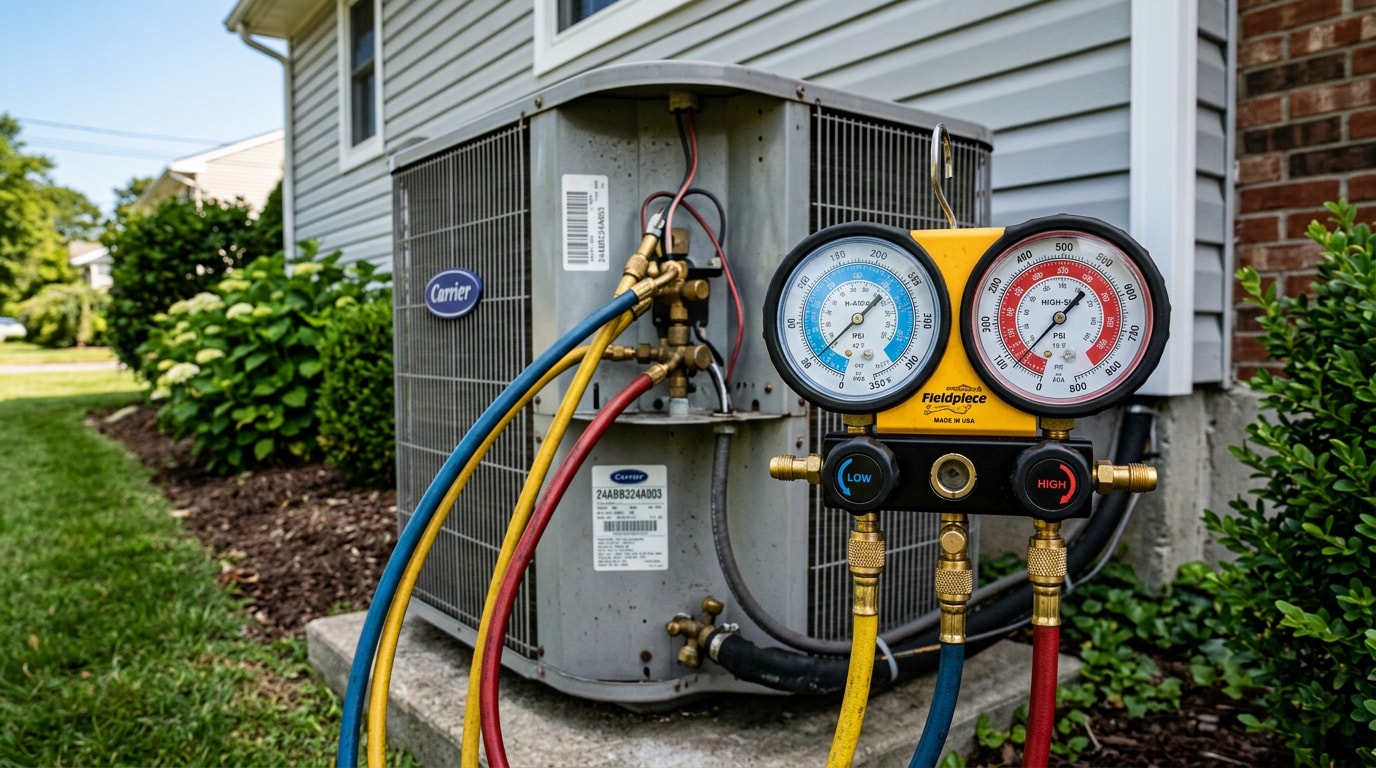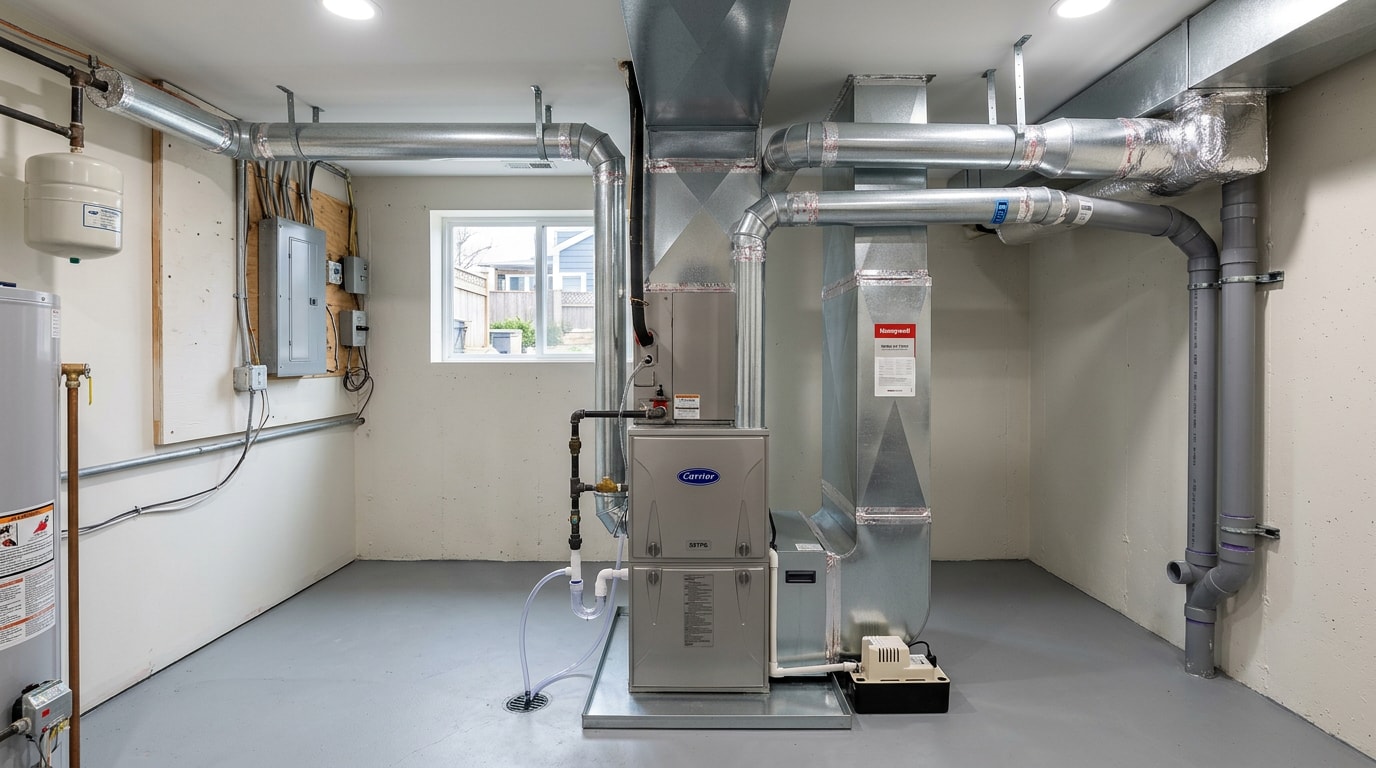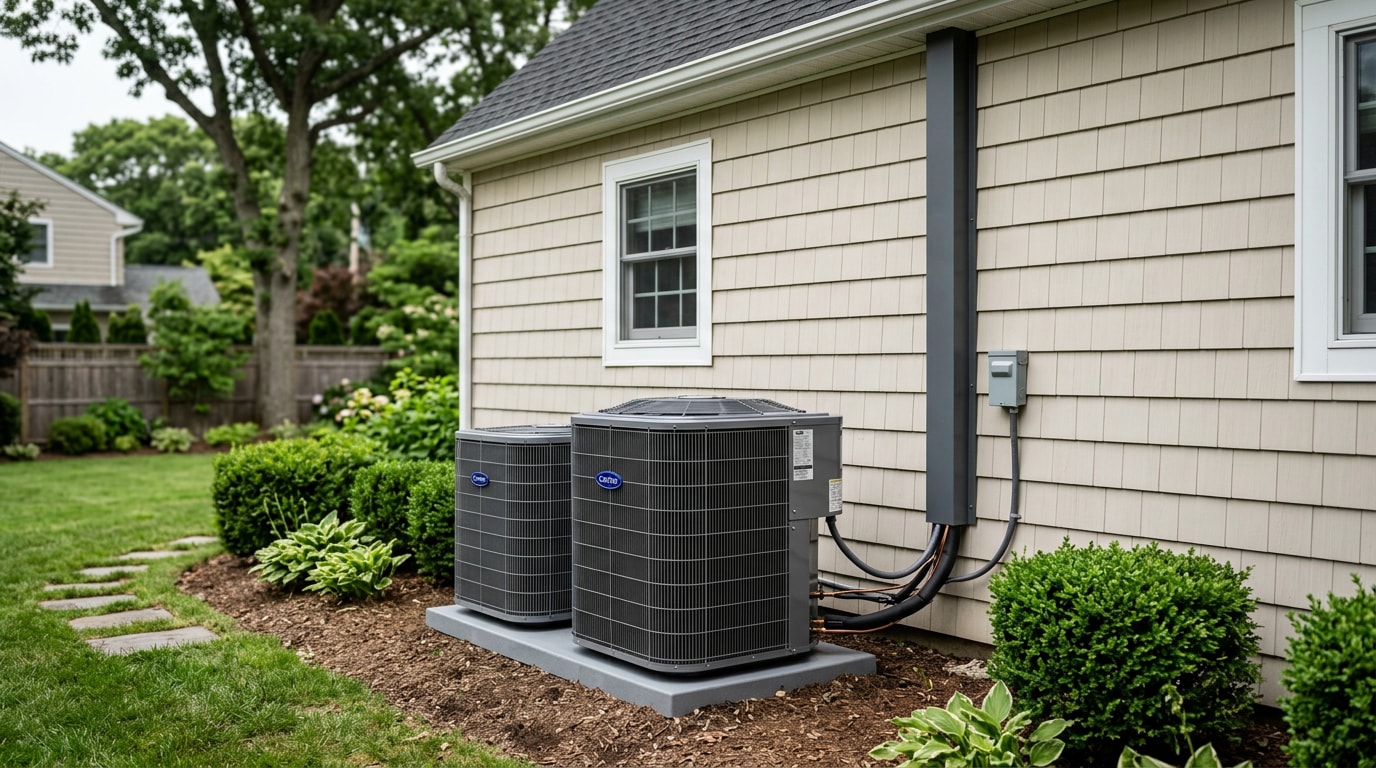
Most people search "heat and air services near me Long Island, NY" on one of two days: the January morning the furnace will not fire, or the July afternoon the AC blows warm at 94 degrees. This guide covers what those services actually include, what they cost here in 2026, and the one rebate rule that trips up almost every Long Island homeowner shopping for a heat pump.
Heat and Air Services Long Island Homeowners Actually Book
Four categories cover nearly every call across Nassau and Suffolk:
- Repair. No heat, no cooling, short cycling, leaks, strange noises, breaker trips.
- Installation and replacement. Furnaces, boilers, central air, heat pumps, ductless systems, ductwork.
- Maintenance. Spring cooling tune-up, fall heating tune-up, membership plans.
- Emergency service. After-hours no-heat and no-cool calls, water leaking from a boiler, suspected gas odor.
Most homes here need two of those at once, because heating and cooling share the same ductwork, thermostat, and electrical. A company that only touches one half of the system will hand you half an answer.
Start with the service you need now: heating system repair, air conditioning repair, HVAC installation, or HVAC maintenance.
How to Vet a Heat and Air Company Near You
New York does not issue a single statewide HVAC contractor license. Licensing happens at the county and town level, which is why verification matters more here than in most states.
Run these five checks before you hand over a credit card:
- Ask for the county home improvement license number. Nassau and Suffolk each license home improvement contractors through their consumer affairs offices. Ask for the number, then confirm it with the county directly.
- Confirm EPA Section 608 certification. Any tech opening a refrigerant circuit needs it. It is federal law, not a nice-to-have.
- Get a flat price in writing. A written repair price beats an hourly estimate that drifts once the panel comes off.
- Separate parts warranty from labor warranty. They are almost never the same length.
- Ask who answers at 9 p.m. A local dispatcher and a national call center produce very different arrival times in a heat wave.
A contractor who hesitates on any of these has told you something useful. You can see how a legitimate shop documents its work on the HVAC contractor services page and in the completed project gallery.
Ready to compare? Get a free estimate and ask for the license number on the first call.
What Heat and Air Services Cost on Long Island in 2026
These are typical ranges for Nassau and Suffolk homes, not quotes. Access, system age, equipment brand, and permit requirements move every number.
| Service | Typical 2026 Long Island range |
|---|---|
| Diagnostic or service call fee | $89 to $199 (often credited toward repair) |
| Common AC repair (capacitor, contactor, fan motor) | $200 to $900 |
| Furnace repair | $250 to $1,200 |
| Boiler repair | $300 to $1,500 |
| Seasonal tune-up (per system) | $100 to $250 |
| Maintenance membership (annual) | $150 to $400 |
| Central AC replacement | $7,000 to $15,000 |
| Gas furnace replacement | $5,500 to $12,000 |
| Single-zone ductless mini split | $4,500 to $8,000 |
| After-hours emergency premium | $100 to $300 above standard rates |
Two notes most price pages skip. First, ask how the diagnostic fee is credited: some companies apply it only to repairs performed that same visit. Second, peak-season pricing is real, and a July condenser replacement rarely costs what an October one does.
For a deeper breakdown of symptom-by-symptom repair pricing, see our guide to air and heating repair on Long Island.
Heating Services Built for Long Island Winters
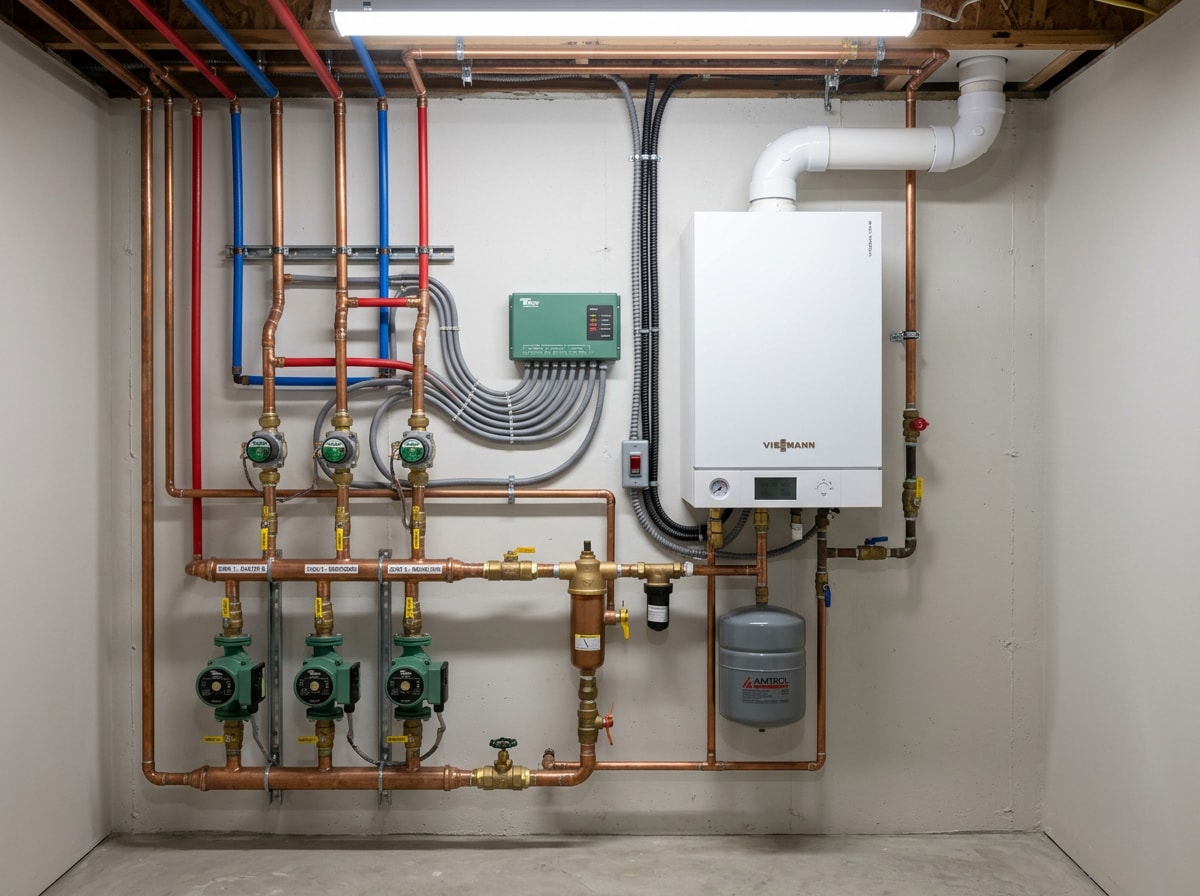
Furnace and boiler repair make up most winter calls, followed by replacement when a system is past saving.
Call for heating service if the unit will not start, short cycles, keeps tripping a reset, leaves back bedrooms cold, loses pressure, drips at the base, or bangs and kettles when it fires.
Steam boilers and hot-water boilers fail differently, so a tech should identify yours before quoting parts. Oil-to-gas conversion is also common across the Island, where gas reached the street decades after the house was built.
If you are replacing rather than repairing, AFUE is the number to compare. It is the share of fuel converted to usable heat, and ENERGY STAR's furnace product criteria list the current certification thresholds for northern-climate gas and oil furnaces.
Cooling Services for Summer Peaks
AC repair calls cluster around a short list of parts:
- Failed run capacitor
- Burned contactor
- Seized condenser fan or blower motor
- Clogged condensate drain backing water into the pan
- Refrigerant leak at a line set or coil
If the system runs but will not cool, the cause is usually on that list before anything exotic.
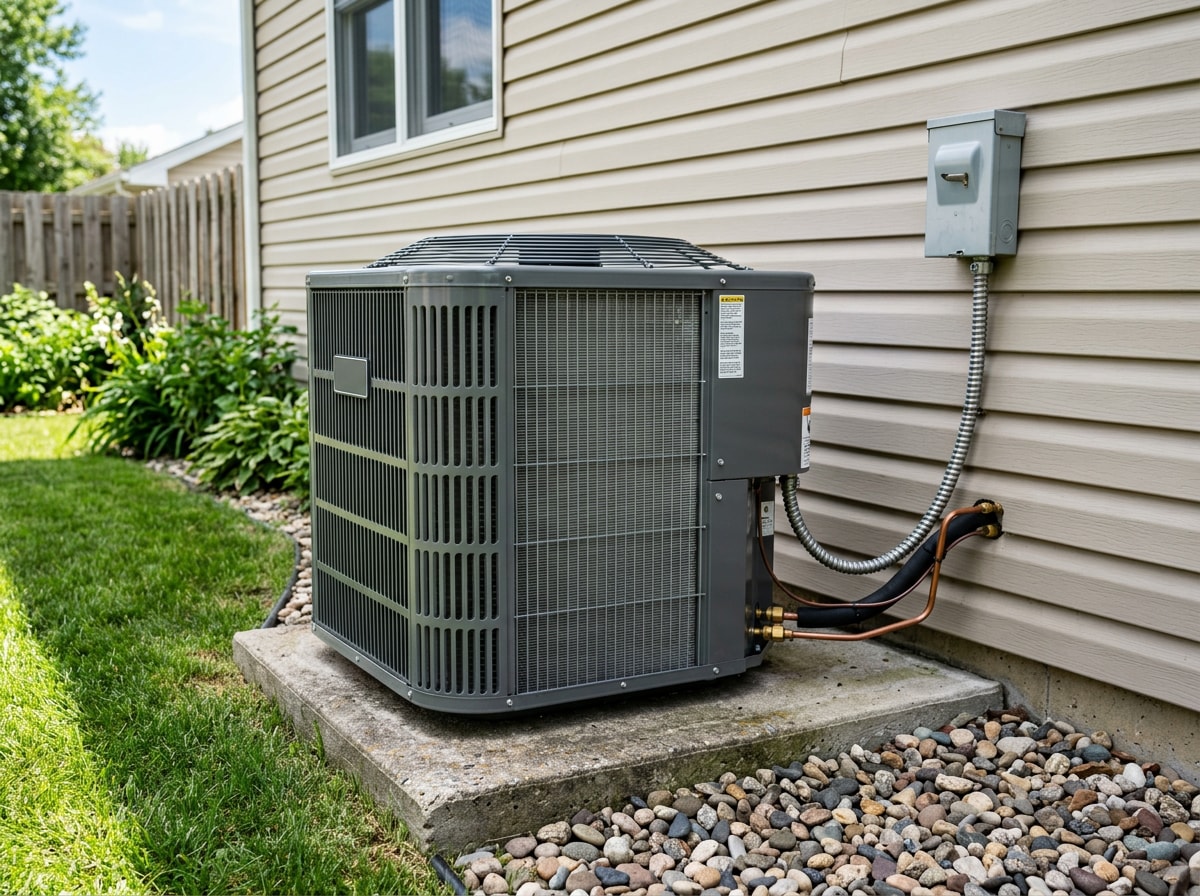
Beyond repair, cooling work on Long Island covers central air installation, replacement once a unit passes 15 years, and spring tune-ups. In our own route data, condenser coil fouling shows up far earlier on South Shore homes within about a mile of the water than on inland Nassau homes of the same vintage, which is why we rinse those coils on a tighter schedule than the manufacturer's baseline.
Heat Pumps, Ductless Systems, and the Long Island Rebate Catch
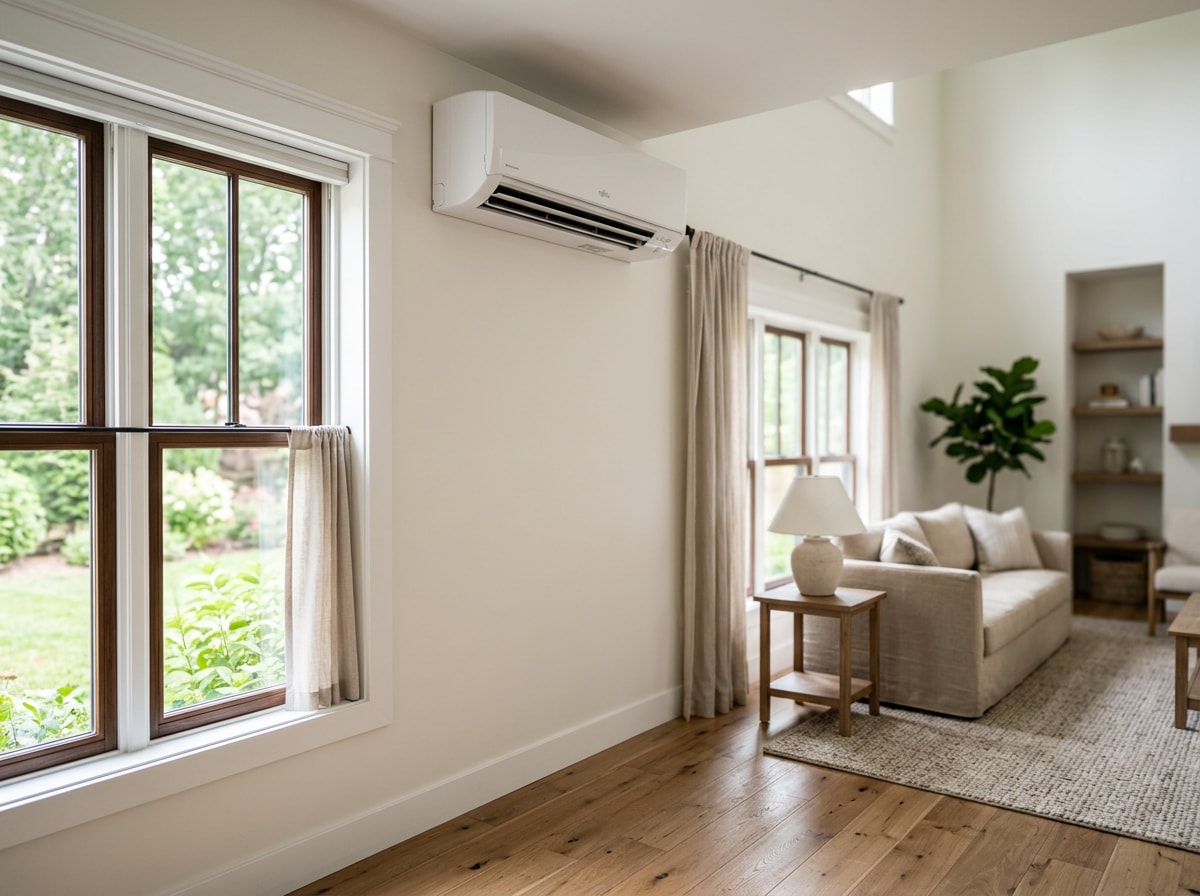
Ductless mini splits solve what ducts cannot reach: Cape Cods with knee-wall attics, 1950s ranches, finished basements, garage conversions, additions, and home offices. Multi-zone setups give each room its own control, and cold-climate models keep producing heat well below freezing.
Here is the part that costs Long Island homeowners real money. Most "New York heat pump rebate" articles describe NYS Clean Heat amounts tied to utilities like Con Edison, National Grid, and NYSEG. If your electric bill comes from PSEG Long Island, those are not your numbers. Your incentives run through PSEG Long Island's own Home Comfort program, and the utility is explicit that equipment must be purchased from and installed by a participating Home Comfort Partner to qualify. Hire a non-participating contractor and the rebate disappears no matter how efficient the equipment is.
Two more eligibility details worth confirming before you sign: qualifying cold climate air source heat pumps must appear on the Northeast Energy Efficiency Partnerships (NEEP) Cold Climate Air Source Heat Pump Specification Product Listing , and there must be a PSEG Long Island residential electric account at the installation site in the applicant's name . Check current amounts on the PSEG Long Island heat pump rebate page the week you buy, because tiers change.
A practical comparison on a Levittown-era ranch with a working gas furnace: a cold-climate heat pump usually wins on summer cooling and shoulder-season efficiency, while keeping the furnace as deep-cold backup. Just confirm how a dual-fuel setup affects your rebate tier first.
Indoor Air Quality Add-Ons
The equipment that bolts onto an existing system does the work here: media and HEPA-grade filtration, UV purifiers, whole-home humidifiers, whole-home dehumidifiers, and duct sealing that stops conditioned air from leaking into attics and crawlspaces.
Coastal humidity drives more air quality complaints on Long Island than dust does. Sticky second floors, musty basements, and window condensation are the usual three.
The EPA's guide to indoor air quality in homes notes that inadequate ventilation raises indoor pollutant levels, and high temperature and humidity can increase concentrations of some pollutants . No air purifier prevents illness, and any contractor claiming otherwise is overselling.
Pair air quality work with your water systems if hard water or sediment is also an issue. The water filtration category page covers whole-home and point-of-use options.
Emergency HVAC Service
A true emergency is no heat in winter, no cooling in a heat wave with vulnerable people in the house, a gas smell, or water leaking from a boiler. A noisy fan or a weak vent can wait for a normal appointment.
If you smell gas: shut the system off, open windows, leave the house, and call your utility before anyone else.
One scheduling detail competitors bury. During a heat wave, same-day slots fill by late morning. Calling at 8 a.m. is often the difference between today and Thursday. See response windows and after-hours terms on the emergency HVAC service page.
What Professional Maintenance Actually Includes
A real tune-up runs about an hour per system, not a filter swap. A complete visit covers:
- Tightening and testing electrical connections and controls
- Lubricating moving parts
- Checking airflow and static pressure
- Cleaning coils and clearing the condensate drain
- Calibrating the thermostat
- Watching a full startup and shutdown sequence for faults
On heating equipment, add combustion analysis and a venting inspection. That step exists because a cracked heat exchanger or blocked flue can push carbon monoxide into living space, and it is invisible without instruments.
Cadence is simple: cooling tune-up in spring, heating tune-up in fall. Many homeowners bundle both into a plan that adds priority scheduling during peak weeks plus a repair discount. Compare line items before signing, because plan contents vary widely.
While a tech is already in the basement, it is worth asking about the water heater. Combustion venting is often shared, and water heater repair or replacement is cheaper to schedule on the same visit.
Service Areas Across Nassau and Suffolk
Coverage spans both counties, with same-day dispatch across most of Nassau County and Suffolk County. Regularly served towns include Hempstead, Huntington, Smithtown, Islip, Babylon, Bay Shore, Brentwood, Wantagh, Levittown, and Massapequa.
East End addresses, including the Hamptons and Montauk, are scheduled by crew location that day. If your town is not listed, call. It is often still in range.
The full Long Island service area page lists every community currently covered, and the Amonte HVAC homepage shows current response times and credentials.
FAQ
What areas of Long Island do you cover?
Both Nassau and Suffolk County, including Hempstead, Massapequa, Wantagh, Huntington, Smithtown, Islip, Babylon, Bay Shore, and Brentwood. Eastern Suffolk and the East End are covered on a scheduling-dependent basis. If you do not see your town, call and we will confirm coverage.
How much does a heat and air service call cost on Long Island?
Most companies here charge a diagnostic fee between $89 and $199, often credited toward the repair if you approve the work that day. Ask how the credit applies before booking, and ask whether after-hours rates apply.
Do I need a license to confirm, and who issues it?
New York has no single statewide HVAC contractor license. Nassau and Suffolk license home improvement contractors at the county level, so ask for the county license number and verify it with the county consumer affairs office before work starts.
Should I repair or replace my system?
A common rule: if the repair costs more than a third of replacement and the unit is past 12 to 15 years, replacement usually wins. Repeated refrigerant top-offs, a cracked heat exchanger, or a failed compressor generally push the decision to replacement.
Do you offer 24/7 emergency HVAC service on Long Island?
Yes. Emergency dispatch runs nights, weekends, and holidays, with same-day response typical for no-heat and no-cool calls. Peak heat waves and cold snaps can stretch that window, so ask about overtime rates when you call.
How often should HVAC maintenance be scheduled?
Twice a year for homes with separate heating and cooling equipment: cooling in spring, heating in fall. Heat pumps run in both seasons and justify two visits on their own.
Are permits required for HVAC replacement on Long Island?
Usually yes. Most Long Island towns and villages require a permit for equipment replacement, fuel conversions, and new electrical circuits. The contractor should pull it, and the permit should appear on your written proposal.
What is different about HVAC on Long Island versus the rest of New York?
Three things. Coastal humidity forces AC systems to run longer to pull moisture, which shortens compressor life. Salt air near the shore corrodes outdoor coils years faster than inland units. And dense post-war housing often has undersized original ductwork, which chokes airflow and leaves upstairs rooms warm no matter how new the equipment is.
About This Guide
Written and reviewed by the service team at Amonte HVAC, a Long Island heating, cooling, and water systems contractor working across Nassau and Suffolk County. Our technicians hold EPA Section 608 certification and work on steam boilers, hot-water boilers, gas furnaces, central air, and ductless systems in homes built from the 1920s through new construction. The coil-corrosion and rebate-eligibility observations above come from our own service route, not from a manufacturer brochure.
Questions about your system, a quote you already received, or coverage in your town? Contact us for a free estimate.