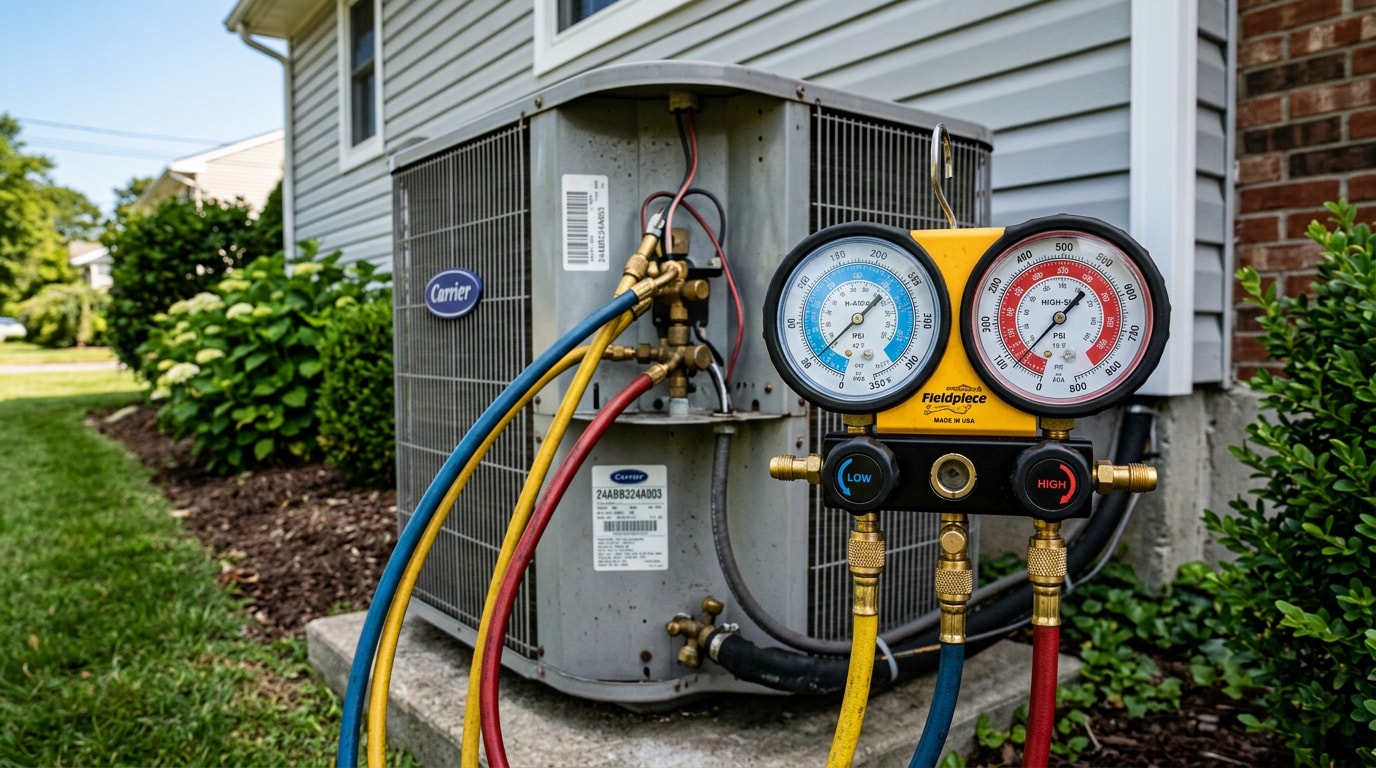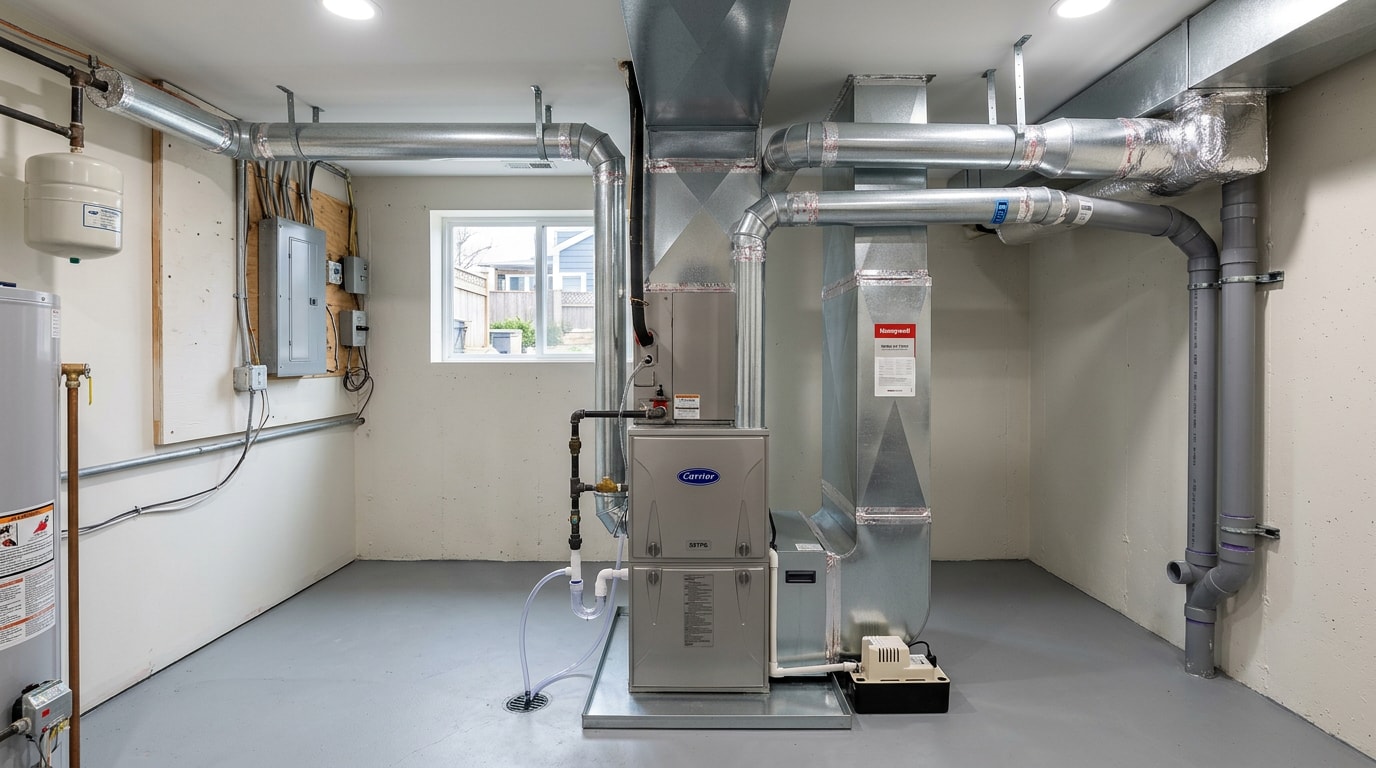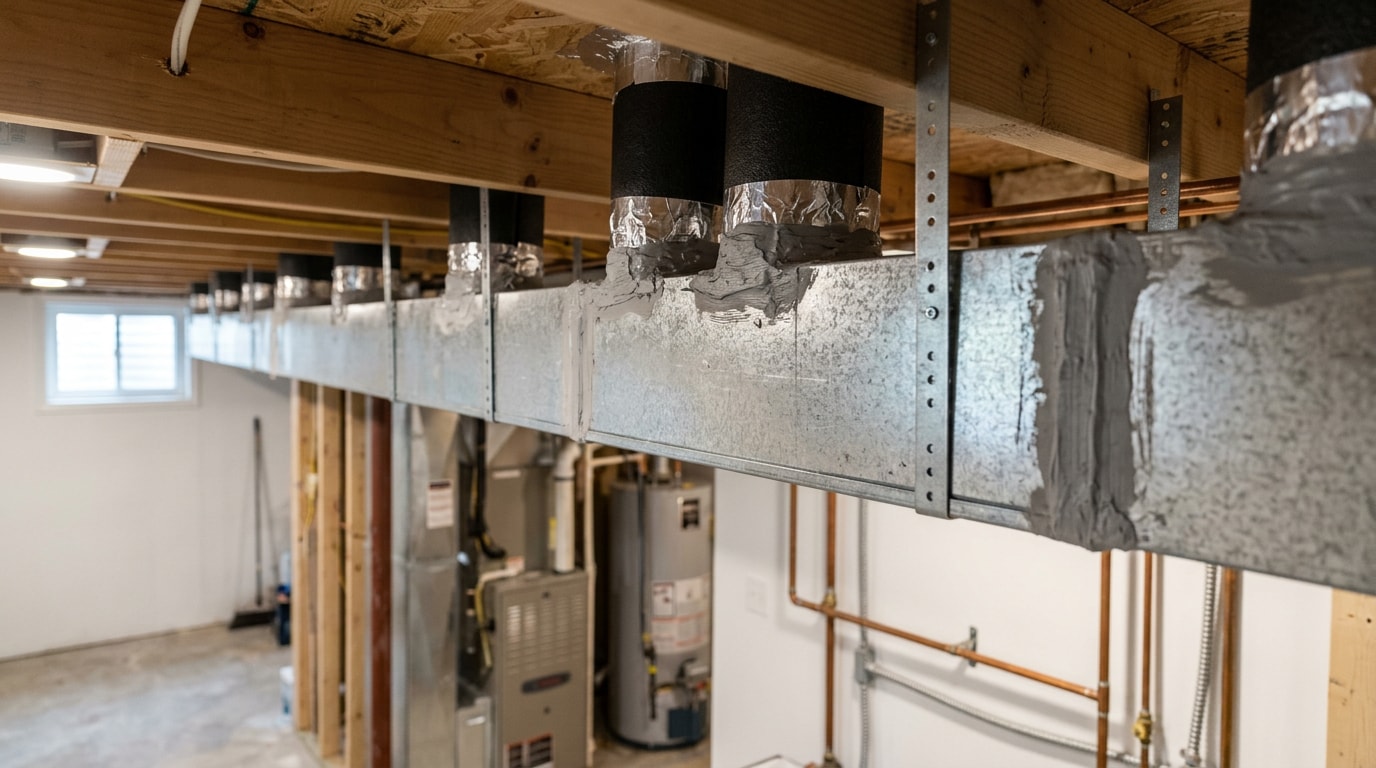
Choosing between HVAC ductwork installation contractors in Nassau County, NY is a bigger decision than choosing the equipment brand, because a leaky or undersized duct system will throttle even a top-tier air handler. Most homeowners here compare three quotes on price alone and never check the one credential the county actually requires. This guide fixes that, in the order that matters: vetting first, then cost, then the technical work a good contractor should be showing you.
Start With the License Check Nassau County Requires
Before you look at a single number on a proposal, verify the contractor's Nassau County home improvement license.
This is county-level, not state-level, and it trips up homeowners who assume a New York business certificate covers it. Nassau County's Department of Consumer Affairs licenses home improvement businesses under Nassau County Administrative Code Section 21-11 and reviews applications to confirm contractors meet established standards.
A few details worth knowing before you sign anything:
- Licensing is administered through the Nassau County Department of Consumer Affairs, which also handles complaints.
All licensed home improvement contractors must be fingerprinted.
Subcontractors, other than plumbers and electricians, must also hold a valid Consumer Affairs license.
Consumer protection investigators can mediate disputes and issue violations when a complaint is found valid.
That last point is the practical one. If a duct job goes wrong and the contractor was never licensed in the first place, your recourse shrinks fast.
Ask for the license number in writing. Ask whether any part of the duct work will be subcontracted, and to whom.
How to Vet the Bid Itself
Once the license clears, judge the proposal. Duct quotes are notoriously vague, and vagueness is where change orders live.
Six things a real ductwork proposal contains
- A room-by-room load calculation, not a rule-of-thumb tonnage number.
- A duct layout showing trunk sizing, branch runs, and return air paths.
- Named materials and R-values, not just "new ductwork."
- Sealing method specified (mastic or approved tape), included in the base price.
- Permit responsibility stated, including who pulls it and who pays fees.
- A post-install verification step, such as static pressure readings or a duct leakage test.
Questions that separate the bidders quickly
- "Show me the Manual J." If nobody can produce one, they guessed.
- "What static pressure are you designing to?" A blank stare is an answer.
- "Is sealing and insulation in this price, or a separate line later?"
- "Who handles the permit and the two inspections?"
- "What happens if the attic access is worse than you expected?"
In our own experience quoting duct work across Nassau County, the single most common finding on older homes is not leaky supply runs. It is a return side that is roughly half the size it should be, which is why a house can have strong airflow at the registers and still never get comfortable. Ask every bidder how many returns they plan to add. If the answer is zero and your house has one central return, press harder.
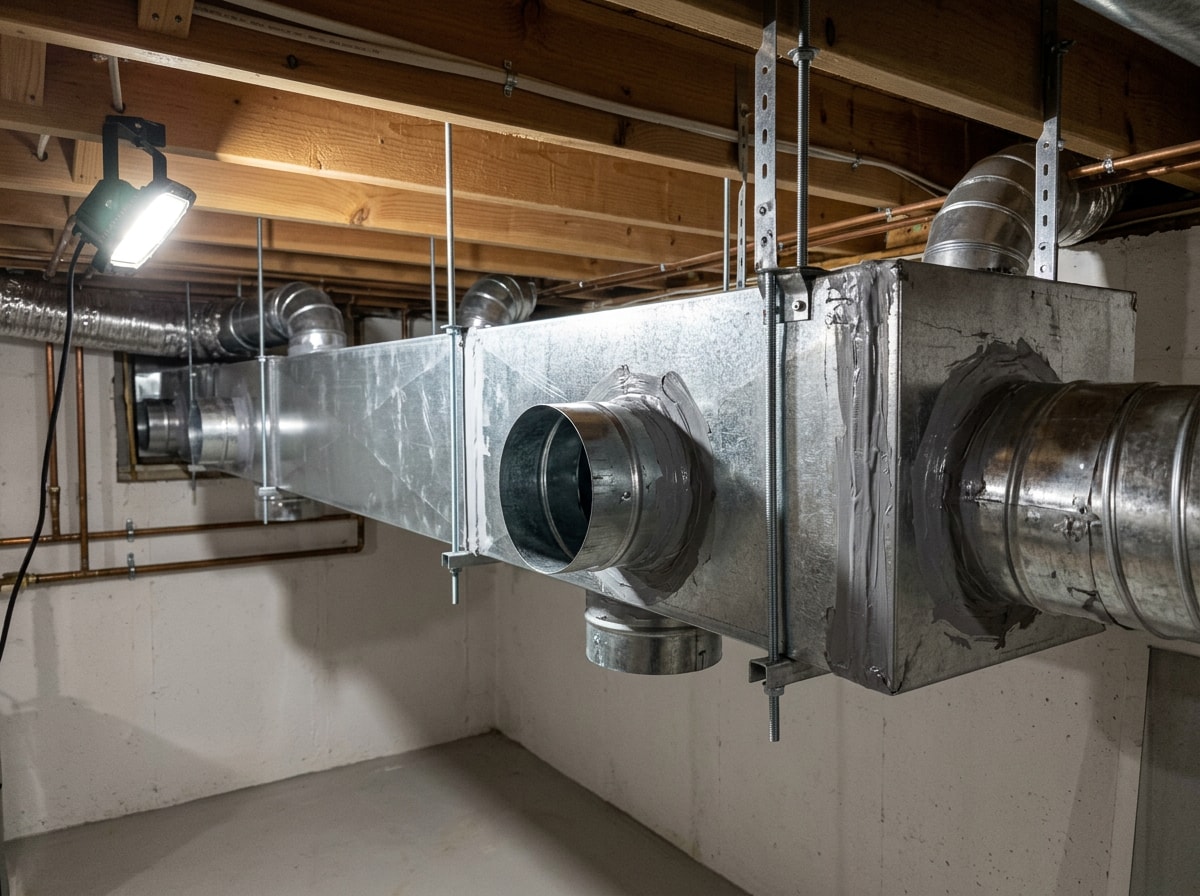
If you want to see how a finished job should look before you commit, browse our recent project work or start with an overview of our HVAC contractor services.
What HVAC Ductwork Installation Costs in Nassau County, NY in 2026
Duct pricing on Long Island lands in a wide band. A range is the only honest answer, because cost tracks the house, not a menu.
The figures below reflect local 2026 ranges for residential work in Nassau County. Treat them as planning numbers, not quotes.
| Scope of work | Typical 2026 Nassau County range | Usual timeline |
|---|---|---|
| Duct inspection and static pressure testing | $150 to $400 | 1 to 2 hours |
| Duct sealing, insulation, or minor modifications | $1,000 to $3,000 | 1 day |
| Partial duct replacement (failing runs, one zone) | $2,500 to $6,500 | 1 to 2 days |
| Full duct replacement, existing layout | $6,000 to $12,000 | 2 to 4 days |
| Full retrofit, home with no existing ductwork | $10,000 to $18,000+ | 4 days to 2 weeks |
| Adding a dedicated return or new branch run | $600 to $2,000 per run | Same-day to 1 day |
National cost aggregators publish lower numbers for the same categories. That gap is regional labor, licensing, and permitting reality on Long Island, not a markup scheme.
What actually moves your number
Six variables drive most of the spread:
- Home size and layout. Multi-level and additions-over-time floor plans cost more per square foot.
- Condition of existing ducts. Salvageable trunk lines save real money.
- Access. Knee-wall attics, finished basements, and tight crawl spaces add labor hours fast.
- Material choice. Rigid sheet metal costs more upfront than flex and lasts longer.
- Removal and disposal. Old duct demolition and haul-away is a line item, not a favor.
- Sealing and insulation scope. Skipping it lowers the bid and raises the utility bill.
One more that surprises people: adding bath or kitchen exhaust venting during the same visit. It is cheaper to do it while ceilings are open, but it does move the total.
For real numbers on your specific home, get a free estimate and we will walk the space before quoting.
Permits and Inspections in Nassau County
Duct modification is permitted work in most Nassau County jurisdictions, and central AC or heating installations generally require both mechanical and electrical permits.
Permits are issued by your individual village, town, or city building department, not by one county office. Fees and processing times vary accordingly. Budget roughly $200 to $500 in permit fees depending on scope, and expect processing that can stretch several weeks in busier departments.
Two inspections are standard:
- Rough-in, before anything gets closed up with drywall or insulation.
- Final, after the system is complete and operating.
The code baseline behind all of it is statewide. New York's Division of Building Standards and Codes administers the mandatory statewide Uniform Fire Prevention and Building Code and the State Energy Conservation Construction Code. You can review the framework through the New York Department of State's building code division. Note that local governments, including Nassau County, are authorized to adopt standards that are higher or more restrictive than the Uniform Code , so always confirm with your local building department.
This is exactly why a licensed contractor who pulls permits beats the lowest bid. Unpermitted duct work surfaces later, usually at closing.
We work across the region, including Nassau County and the wider Long Island service area.
Signs Your Ducts Are the Real Problem
Leaky ductwork rarely announces itself with visible damage. It shows up as comfort complaints.
Watch for:
- Uneven temperatures between floors or between rooms on the same floor
- Weak airflow at registers farthest from the air handler
- Energy bills climbing with no change in habits or rates
- Dust returning within days of a full cleaning
- Musty odors when the system runs
- Whistling or booming noises at startup
The scale of the waste is well documented. In a typical house, about 20 to 30 percent of the air moving through the duct system is lost to leaks, holes, and poorly connected ducts.
Leaky ducts can cut heating and cooling system efficiency by as much as 20 percent , according to ENERGY STAR's duct sealing guidance.
One caveat worth taking seriously. Those same symptoms can point to a failing or undersized air handler, a clogged coil, or a dying blower motor. A proper inspection rules that out before anyone quotes new ducts.
If the equipment itself is suspect, start with air conditioning repair or heating system repair instead of a duct proposal.
Duct Design: Manual J, Manual S, Manual D
Good duct design happens before installation, not after.
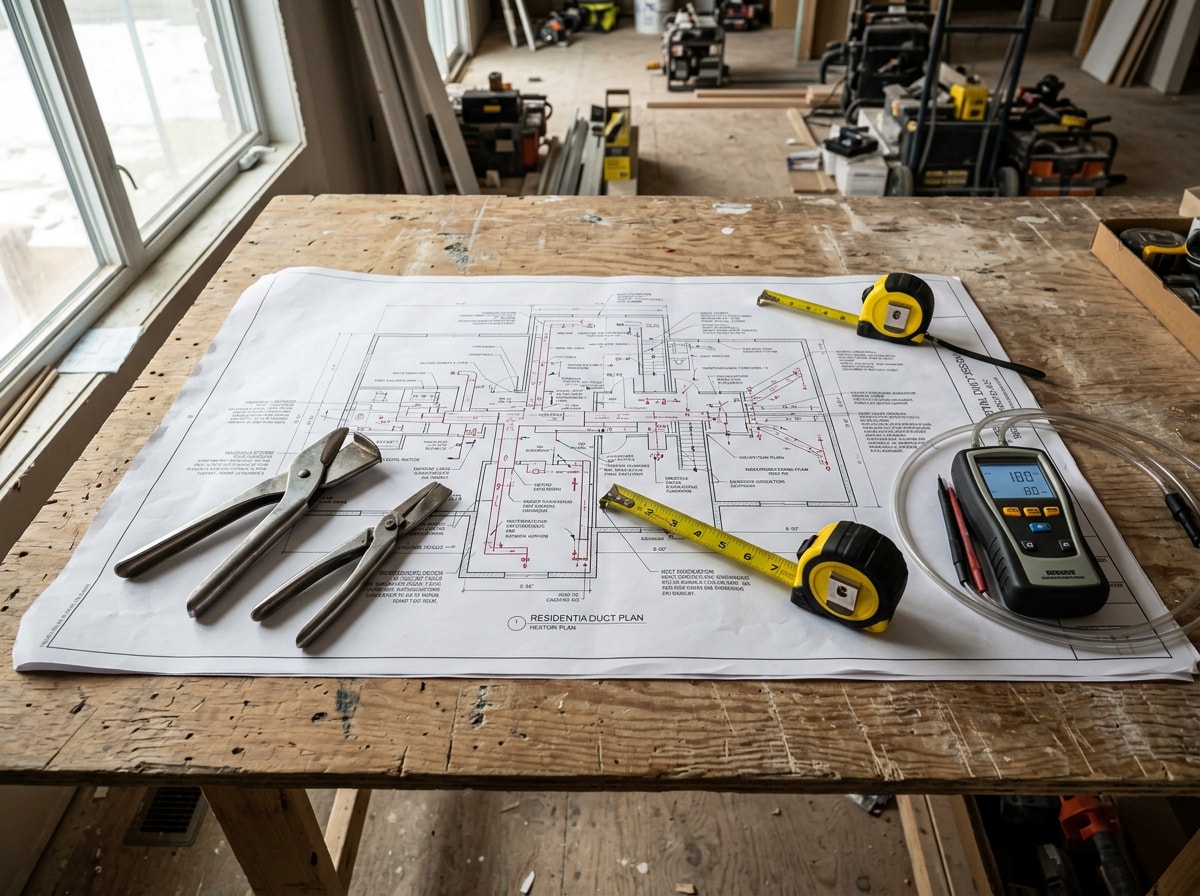
The sequence is standardized. A Manual J load calculation sizes the heating and cooling load room by room. Manual S selects equipment that matches that load. Manual D then sizes trunks, branches, and returns for the correct static pressure and airflow.
Manual D is ACCA's ANSI standard for residential duct design , published by the Air Conditioning Contractors of America. It is not optional busywork. Deficient duct systems are often the direct cause of poor system performance, even when equipment sizing takes the blame.
Why it matters locally: a 1,400 square foot Cape in Levittown and a 2,800 square foot Colonial in Garden City can land on the same nominal tonnage and still need completely different duct layouts and return sizing. Same equipment, different delivery network, opposite comfort outcomes.
Planning new equipment at the same time? See our HVAC installation services.
Installation, Replacement, and Retrofit Are Three Different Jobs
Contractors use these terms loosely. The scope and price differ enormously.
New installation is ductwork in new construction or an addition, designed from scratch with open framing. Cleanest scenario, fewest surprises.
Duct replacement tears out failing runs and rebuilds around an existing layout. Faster than a retrofit, but rarely a straight swap, because the original layout was often undersized to begin with.
Retrofit ductwork means building a duct system into a house that never had one. This is the big one in Nassau County, where plenty of homes still run on radiators or baseboard heat.
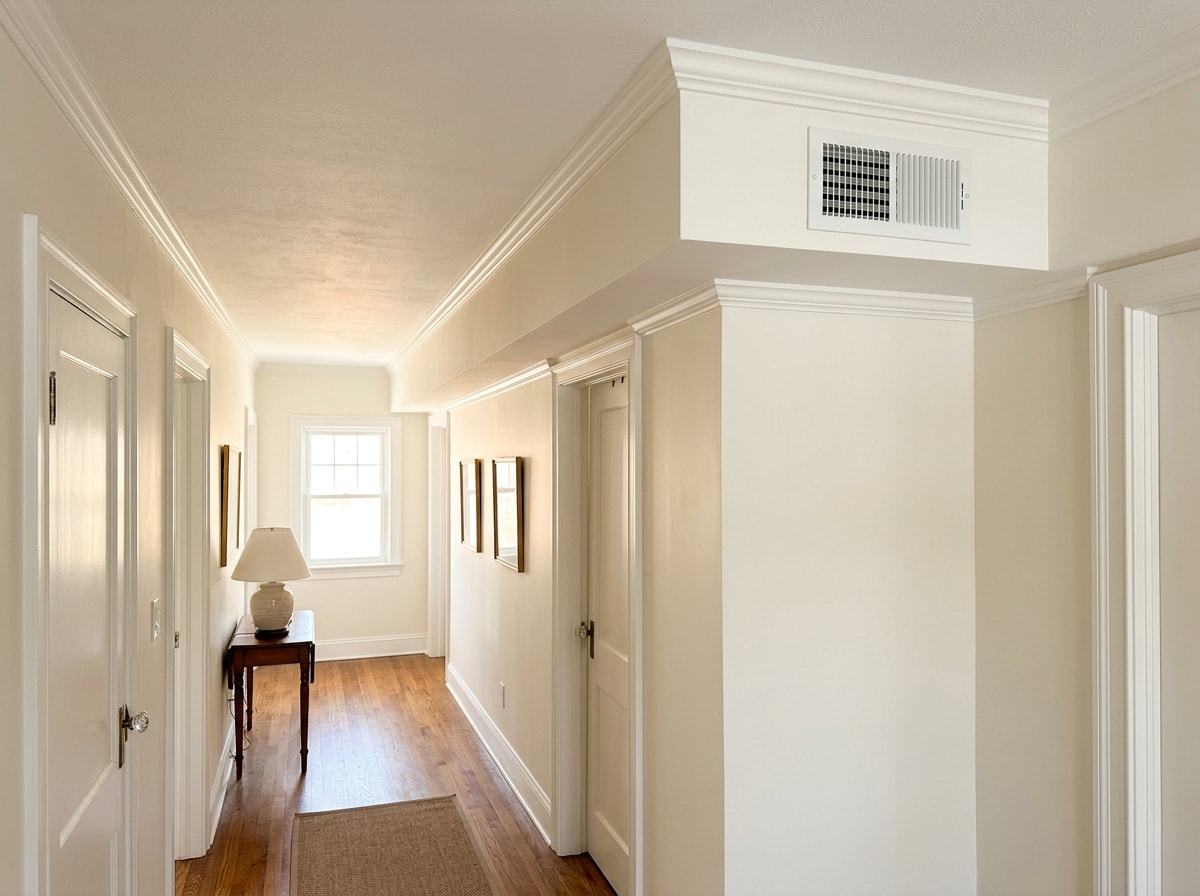
Retrofits typically require soffits, closet chases, an attic-to-basement trunk strategy, and drywall or plaster repair afterward. Ask whether that patching is included in the bid or excluded. It is frequently excluded.
Timelines stretch when you hit finished ceilings, tight attic access, or custom sheet metal fabrication. Any bidder promising a whole-house retrofit in two days is either exceptional or guessing.
Sealing and Insulation Belong in the Original Scope
Sealing and insulation are not a follow-up invoice. They are part of the install.
Unsealed joints dump conditioned air into attics and crawl spaces you do not live in, which cancels out the efficiency you paid for. ENERGY STAR recommends sealing with mastic sealant or metal tape and insulating all accessible ducts, and specifically warns against standard duct tape because it is not long lasting.
In Nassau County, priority zones are unconditioned attics and vented crawl spaces, where summer heat and winter cold hit bare metal hardest. Duct insulation there does more measurable work than anywhere else in the house.
A finished job should be verified, not assumed. Ask for static pressure readings at minimum, or a duct leakage test where the local code requires one.
Regular follow-up keeps that performance intact. Our HVAC maintenance plans include airflow and duct condition checks.
Choosing Duct Materials
Materials should follow the layout, not a one-size template.
| Material | Best use | Durability | Notes |
|---|---|---|---|
| Rigid sheet metal | Trunk lines, long runs, exposed basements | 20 to 25+ years | Highest labor cost, lowest long-term risk |
| Flexible duct | Short branch runs, tight framing bays | 10 to 15 years | Fine when properly supported, fails when kinked or stretched |
| Duct board (fiberboard) | Plenums, some branch work | 10 to 15 years | Built-in insulation, lower physical durability |
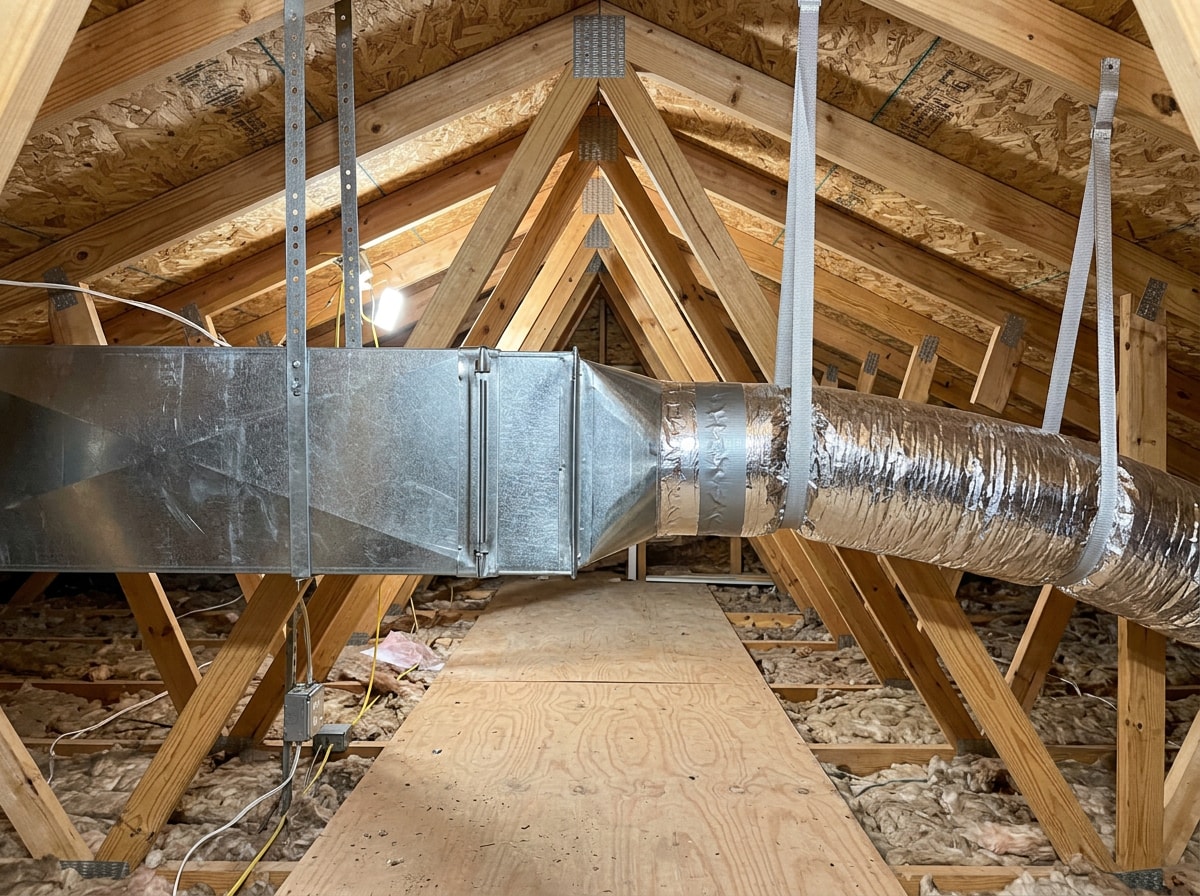
Flex duct is not automatically inferior. It becomes a problem when it sags between supports, kinks around a turn, or gets stretched across a span it was never meant to cover. ACCA's current Manual D revision specifically addresses the impact of excess length, sag, and compression in flexible ducts.
If a bidder proposes flex for a 40 foot main run, that is a cost decision, not an engineering one.
Ductwork in Older Long Island Homes
Plenty of local housing stock predates modern HVAC standards. Duct systems in those homes have been modified, extended, and patched by different hands over decades.
Common findings:
- Undersized or single central returns
- Abandoned branch runs still connected to the trunk
- Panned joist cavities used as return ducts, which leak badly
- Supply runs added for an addition with no corresponding return
- Original trunk sizing for a furnace that was replaced twice since
One safety flag: homes of a certain vintage can turn up asbestos-wrapped duct or pipe insulation. That is licensed abatement work, not something an HVAC crew removes. If it is suspected, testing comes first and duct work waits.
Red Flags When Comparing Contractors
- No Nassau County home improvement license number offered on request
- No load calculation, ever, for any house
- A verbal quote or a one-line written proposal
- Sealing and insulation quoted as an optional add-on
- Pressure to skip the permit "to save you money"
- Large deposit demanded before any materials are ordered
- No mention of who repairs drywall or plaster after a retrofit
The vetting process is similar across Long Island. If you are comparing shops on the East End or in Suffolk, our guide to vetting small HVAC companies in Suffolk County walks through the same framework with more detail on company size and response times.
For homes already without heat or cooling, we also offer emergency HVAC service.
FAQ
How much does ductwork installation cost in Nassau County, NY?
Sealing, insulation, and minor modifications typically run $1,000 to $3,000. Full duct replacement on an existing layout usually falls between $6,000 and $12,000. A complete retrofit in a home with no existing ductwork commonly runs $10,000 to $18,000 or more. These are 2026 planning ranges, not quotes.
How long does ductwork installation take?
Most projects run from one day to about two weeks. A straightforward replacement in an accessible basement or attic often finishes in one to two days. A full retrofit in a finished home with difficult access takes several days longer, plus time for patching and final inspection.
Do you need a permit for ductwork in Nassau County?
Usually yes. Adding or modifying ductwork affects airflow, energy code compliance, and in some cases fire safety, which triggers permit requirements. Permits are issued by your local town, village, or city building department, so confirm the specifics before work begins.
Do HVAC ductwork contractors need a license in Nassau County?
Yes. The Nassau County Department of Consumer Affairs is responsible for licensing home improvement contractors. Ask for the license number before signing, and confirm that any subcontractors are licensed too.
How long does ductwork last?
It depends on material. Duct board and flexible ducting typically last 10 to 15 years. Galvanized steel ductwork can last 20 to 25 years or more. Poor sealing, moisture, rodent damage, and physical crushing shorten all of those numbers.
Should I replace ductwork when I replace my AC or furnace?
Often, yes, at least partially. New equipment is designed around specific airflow and static pressure targets. If the existing ducts cannot deliver that airflow, the new system runs longer, cycles harder, and never hits its rated efficiency. At minimum, have the ducts measured and pressure-tested before the equipment is ordered.
Can I replace ductwork myself?
Not for a full replacement. Duct replacement requires load calculations, code compliance knowledge, and proper sealing technique. A self-installed system can fail inspection and void the equipment manufacturer's warranty, which costs more than the labor you saved.
Is duct cleaning the same as duct sealing?
No. Cleaning removes debris from inside the ducts. Sealing closes the leaks that let conditioned air escape and let dust get pulled in. If dust keeps returning after a cleaning, sealing is usually the actual fix.
How do I know if my ducts are undersized?
The clearest indicator is high static pressure measured across the air handler, compared against the manufacturer's rated maximum. Symptoms include loud airflow, weak delivery at distant rooms, and equipment short cycling. A technician can measure this in under an hour.
Talk to a Licensed Nassau County Duct Contractor
Ductwork is the part of the system you never see and always feel. Getting the design, the sealing, and the permits right the first time costs less than correcting them after the ceilings close.
Amonte HVAC is a licensed and insured Long Island contractor handling duct design, installation, replacement, sealing, and insulation across Nassau County. Learn more about us on our homepage, or request a free estimate and we will measure the house before quoting a number.